
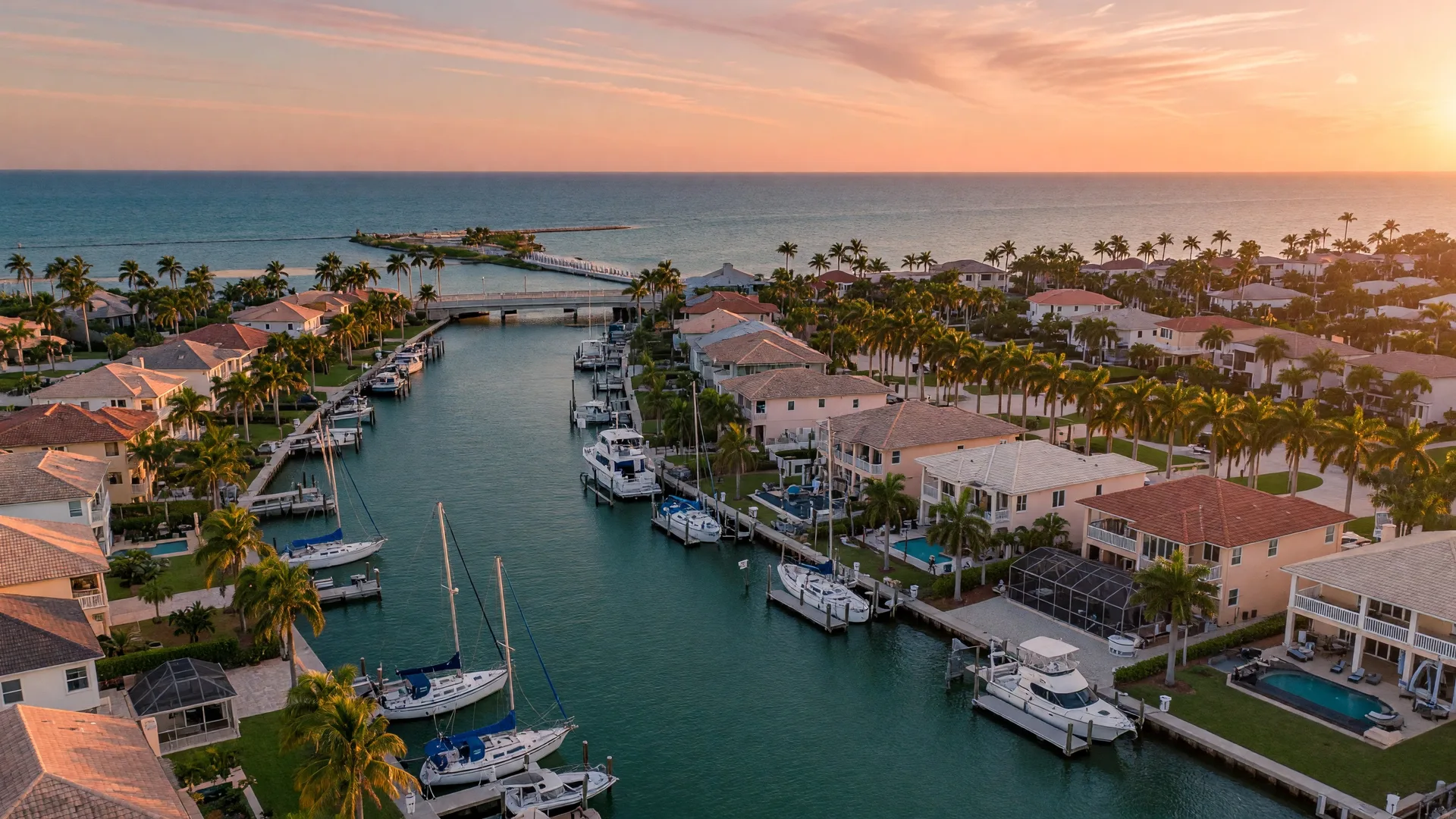
Waterfront Living
in Sarasota
Six types of waterfront — each with a different lifestyle, price point, and set of considerations.
Overview
Sarasota is one of the best waterfront markets in Florida.
The Sarasota region offers more variety in waterfront living than almost anywhere else on the Gulf Coast. From Gulf-front condos on Siesta Key to canal-front homes in Palmetto, sailboat-accessible estates on Bird Key, and riverfront properties along the Myakka River, each type of waterfront comes with its own price range, lifestyle, and set of practical considerations — flood insurance, dock maintenance, boat access, and more.
What makes this area different is that the waterfront is not limited to one community or one price point. You can find waterfront living from the mid-$300,000s in canal communities in Charlotte County to $10 million-plus Gulf-front estates on the barrier islands. The key is understanding what you are actually buying — because not all waterfront is the same, and the details matter.
Below I have outlined the six types of waterfront properties you will find across Sarasota, Manatee, and Charlotte Counties, with the specifics on price, lifestyle, flood insurance, boat access, and maintenance for each one.
Type 1 of 6
Gulf-Front Condos & Estates
Direct beachfront living on Sarasota's barrier islands — wake up to the sound of waves, walk out to white sand, and watch sunsets over the Gulf of Mexico every evening.
Where You Will Find This Type
The most sought-after Gulf-front addresses in the region, with quartz-sand beaches consistently ranked among the best in the U.S. Gulf-front condos and single-family homes line Beach Road and the west side of the island.
A short drive from St. Armands Circle, Lido Key offers Gulf-front living with easy access to downtown Sarasota's dining, arts, and cultural scene. Lido Beach and the South Lido County Park are major draws.
A quieter, more private island with a mix of Gulf-front estates, luxury condos, and resort-style communities. The Longboat Key Club adds a private club dimension to island living.
One of the most exclusive addresses on the Gulf Coast. No bridges connect Casey Key to the mainland, and most properties are single-family estates on large lots — some of the most valuable waterfront in the region.
Lifestyle
Gulf-front living means direct beach access, unobstructed sunset views, and a lifestyle built around the water. Residents walk to the beach, kayak or paddleboard from shore, and enjoy a resort-like setting every day. The barrier island communities also offer walkable dining and shopping at St. Armands Circle and the Village on Siesta Key.
Flood Insurance
Gulf-front properties sit in FEMA high-risk flood zones (typically VE or AE zones). Flood insurance is required for any federally backed mortgage and is strongly recommended regardless. Annual premiums can range from $1,500 to $5,000 or more, depending on elevation, construction, and the property's distance from the shoreline. Wind insurance is a separate policy and also carries significant premiums in coastal zones.
Boat Access
Direct Gulf access is available from many Gulf-front properties, though the experience varies by location. Barrier island properties may have Gulf access but can face shallow water or sandbar issues close to shore. Properties along the Intracoastal on the east side of the islands often provide better-protected deep-water dock access for larger vessels.
Maintenance
Salt air and hurricane exposure accelerate wear on exterior surfaces, roofing, HVAC systems, and mechanical components. Budget 1.5–2% of the property's value annually for maintenance. Roof inspections, impact-rated window maintenance, and seawall or dock inspections by a licensed marine contractor are essential. Sea turtle–friendly outdoor lighting is required on Gulf-front properties during nesting season.
Type 2 of 6
Intracoastal & Bayfront Homes
Waterfront homes along the Intracoastal Waterway and Sarasota Bay — protected water access with quick routes to the Gulf, deep-water docks, and views of the bay and skyline.
Where You Will Find This Type
One of Sarasota's most established bayfront neighborhoods, with deep-water canals and direct bay access. Homes here typically sell between $3 million and $6 million, with some exceeding $10 million for premium parcels.
A quiet, prestigious bayfront community south of downtown Sarasota with estate-sized lots, mature landscaping, and protected deep-water dock access. One of the most desirable addresses in the city.
The bayside of Longboat Key offers Intracoastal waterfront homes with boat docks and protected water access, often at a lower price point than Gulf-front properties on the same island.
Bayfront condos and residences along the Sarasota Bayfront, within walking distance of the Marina, Bayfront Park, and the cultural district.
Lifestyle
Intracoastal and bayfront living puts you on protected water with reliable dock access and a shorter run to the Gulf. This is the sweet spot for boat owners who want deep-water access without the premium of a Gulf-front lot. The bay setting also provides calmer water for kayaking, paddleboarding, and fishing right from your dock.
Flood Insurance
Most Intracoastal and bayfront properties fall in FEMA AE flood zones, where flood insurance is required for federally backed mortgages. Premiums are generally lower than Gulf-front VE zones but still substantial — typically $1,000 to $3,500 per year. Elevation certificates play a significant role in determining your premium, so the elevation of the finished floor matters at the time of purchase.
Boat Access
This is the strongest category for boat owners. Deep-water docks along the Intracoastal and Sarasota Bay provide direct access to the Gulf via Big Sarasota Pass, New Pass, or Longboat Pass. Water depth is generally reliable, and boat lifts are common. Many homes accommodate vessels from 30 to 80+ feet depending on the dock and canal configuration.
Maintenance
Dock and seawall inspections by a licensed marine contractor should happen at least annually. Boat lifts require periodic servicing. Mangrove trimming is regulated by the state and county — if you have mangroves on your property, trimming permits may be needed. Salt air exposure still affects exterior surfaces, though less aggressively than Gulf-front exposure.
Type 3 of 6
Canal-Front Homes
Homes on man-made canals with water access to the Intracoastal Waterway — a more accessible entry point to the waterfront lifestyle, popular with families and first-time waterfront buyers.
Where You Will Find This Type
Palmetto and the historic fishing village of Cortez offer canal-front homes with access to Tampa Bay and the Gulf. The area has a working waterfront character and some of the most affordable canal-front properties in the region.
Established Sarasota neighborhoods with canals leading to the Intracoastal. These areas offer a mix of original and renovated canal-front homes, often with private docks and boat lifts.
Venice has several canal neighborhoods with Gulf access, including the Gulf Beach and Harbor drives areas. Canal-front homes here offer a more relaxed pace with access to Venice's downtown and beaches.
Charlotte County canal communities provide some of the most affordable waterfront living in the region, with Gulf access via the Peace River, Charlotte Harbor, and Englewood Pass.
Lifestyle
Canal-front living is the most approachable way to own waterfront in Sarasota. You get a private dock, water views, and boat access — often at a fraction of the cost of an Intracoastal or bayfront home. The trade-off is that canal width, water depth, bridge clearance, and distance to open water vary significantly, which directly affects what kind of boat you can keep at your dock.
Flood Insurance
Most canal-front properties are in FEMA AE flood zones, requiring flood insurance for federally backed mortgages. Premiums typically range from $800 to $2,500 per year. Some newer or elevated canal homes may qualify for lower rates through the National Flood Insurance Program or private flood insurers.
Boat Access
Boat access depends heavily on the specific canal. Key factors include water depth at low tide, fixed-bridge clearance between your dock and the Intracoastal, and canal width (which affects turn-around room for larger vessels). Many canal-front properties accommodate center-console boats, bay boats, and smaller cruisers — typically vessels in the 20- to 40-foot range. I always recommend verifying dock access details before making an offer.
Maintenance
Canal walls and seawalls need periodic inspection and repair. Dock pilings in salt water can deteriorate over time, especially untreated wood. Water clarity and quality vary by canal — some may require periodic dredging. Exterior surfaces still need attention due to salt air exposure, though generally less than Gulf-front properties.
Type 4 of 6
Riverfront Estates
Privacy and space along Florida's rivers — large lots, natural settings, and freshwater access with a different character from coastal waterfront.
Where You Will Find This Type
The Myakka River corridor through Osprey offers some of the most scenic riverfront estates in the region, with large lots, mature trees, and a sense of seclusion that is hard to find closer to the coast. Properties near Oscar Scherer State Park enjoy a particularly natural setting.
The Myakka River runs through Sarasota and Manatee Counties, offering riverfront properties with a more rural, estate-like setting. Some homes have direct river access for kayaking and fishing.
The Manatee River corridor through Parrish and Ellenton provides riverfront lots with a mix of newer construction and established estates, with access to Tampa Bay downstream.
Lifestyle
Riverfront living offers something different from coastal waterfront — more privacy, larger lots, a quieter pace, and a connection to Florida's natural landscape. Kayaking, fishing, and wildlife viewing are daily activities. The Myakka River corridor in particular is known for manatees, wading birds, and old-Florida scenery.
Flood Insurance
Riverfront properties are frequently in FEMA high-risk flood zones due to river flooding potential. Flood insurance is essential and premiums vary based on the specific flood zone, elevation, and distance from the river. Properties on higher ground or with elevated finished floors may qualify for moderate-risk (X zone) ratings and lower premiums.
Boat Access
River access is available but the experience is different from coastal waterfront. Rivers may have depth limitations, current considerations, and seasonal water level changes. The Myakka River supports kayaking, canoeing, and small- to medium-power boats but is not ideal for large vessels. Properties on the Manatee River or closer to Tampa Bay may offer better access for larger boats.
Maintenance
Riverfront properties face unique maintenance considerations including riverbank erosion, dock maintenance in freshwater environments, and potential flooding during heavy rain seasons. Mangrove and riparian vegetation are protected by state law, so trimming or removal requires permits. Larger lots mean more landscaping and grounds maintenance overall.
Type 5 of 6
Lakefront Communities
Freshwater lake living in master-planned communities — a waterfront lifestyle at a more accessible price point, popular with families and active adults.
Where You Will Find This Type
Lakewood Ranch's Waterside and Waterfront villages offer lakefront homes and lots with views of community lakes and preserves. This is a master-planned setting with full amenities, not a natural lake environment.
A growing community in Venice with lakefront lots and homes, offering waterfront living within a newer master-planned framework.
Several Palmer Ranch villages offer homes adjacent to community lakes and retention ponds, providing water views without direct Gulf or Intracoastal access.
Lifestyle
Lakefront communities offer water views and a waterfront feel at a more approachable price point. These are typically community lakes within master-planned developments — not natural lakes — so the setting is more manicured. Residents enjoy views, occasional wildlife, and a sense of openness that comes with living on water.
Flood Insurance
Lakefront properties in master-planned communities are generally in lower-risk flood zones (X or B zones) because the lakes are engineered with controlled water levels. Flood insurance is typically not required but may be recommended. Always verify the specific flood zone designation for any property you are considering.
Boat Access
Most community lakes do not permit motorized boats. Some allow kayaking, canoeing, or small non-motorized watercraft. This is primarily a water-view lifestyle rather than a boating lifestyle. For residents who want both lake living and boat access, proximity to the Intracoastal or Gulf is the key consideration.
Maintenance
Lower maintenance burden than coastal waterfront. No seawall or dock to maintain, no salt air corrosion, and engineered lakes are typically managed by the community's HOA. Exterior maintenance costs are comparable to any standard single-family home in the community.
Type 6 of 6
Sailboat-Accessible Properties
Deep-water homes with no fixed bridges between your dock and the open Gulf — the gold standard for sailboat owners and large-vessel captains.
Where You Will Find This Type
Canal-front homes west of Tamiami Trail on Siesta Key offer some of the best sailboat water in the region, with deep canals and no fixed bridges to the Gulf via Big Sarasota Pass.
Deep-water canals with sailboat access to Sarasota Bay and the Gulf. One of the premier sailboat-access neighborhoods in Sarasota.
Properties near the Lido Harbour area and along the Intracoastal on Lido Key offer sailboat access through New Pass to the Gulf.
Deep-water canals on the southern end of Longboat Key with sailboat access via Longboat Pass to the Gulf of Mexico.
Sailboat-accessible properties along the Intracoastal between the two jetty systems — a less crowded area with strong deep-water access and a mix of newer and established waterfront homes.
Lifestyle
Sailboat access is defined by water depth (typically 6 or more feet at mean low tide) and no fixed bridges between your dock and the open Gulf. This is the premium tier for boat owners — you can keep a sailboat, large motor yacht, or any deep-draft vessel at your dock without worrying about bridge clearance or shallow water.
Flood Insurance
Sailboat-accessible properties are in the same high-risk flood zones as other coastal waterfront — typically AE or VE zones. Flood insurance is required for federally backed mortgages. Premiums are influenced by elevation, construction type, and distance from open water. Budget $1,500 to $5,000 or more annually.
Boat Access
This is the defining feature. Sailboat water means no fixed bridges, reliable depth, and direct Gulf access. The Sarasota area has several passes to the Gulf — Big Sarasota Pass, New Pass, and Longboat Pass — and sailboat-accessible properties are typically located near one of these inlets. If you sail or captain a deep-draft vessel, this is the water access you are looking for.
Maintenance
Same considerations as other coastal waterfront — seawall and dock inspections, boat lift servicing, salt air maintenance, and mangrove management where applicable. The premium you pay for sailboat access reflects the permanent value of deep water, but the maintenance obligations are comparable to other Intracoastal waterfront properties.
Quick Comparison
At a glance.
| Waterfront Type | Price Range |
|---|---|
| Gulf-Front | $400K – $10M+ |
| Intracoastal / Bayfront | $800K – $10M+ |
| Canal-Front | $400K – $1.5M |
| Riverfront | $600K – $3M+ |
| Lakefront | $350K – $1.2M |
| Sailboat-Accessible | $800K – $8M+ |
Explore Further
Community guides with more detail.
Many of these waterfront areas sit within neighborhoods I have written about in detail. If you want a broader picture of a specific community — schools, cost of living, lifestyle, and real estate — these guides cover it.
FAQ
Frequently Asked Questions About Waterfront Properties
What is sailboat water, and how is it different from regular boat access?
Sailboat water means your dock has direct access to the open Gulf with no fixed bridges in between and a minimum water depth of about 6 feet at mean low tide. Regular boat access may have fixed bridges with limited clearance, shallower water, or longer routes to open water. Sailboat-accessible properties command a premium because they accommodate sailboats and large deep-draft vessels that cannot navigate under fixed bridges.
Do I need flood insurance if I am buying waterfront property in Sarasota?
In most cases, yes. Properties in FEMA-designated high-risk flood zones (AE, VE, or CE zones) are required to carry flood insurance if they have a federally backed mortgage. Even if you pay cash, flood insurance is strongly recommended. Waterfront properties outside high-risk zones may not require it, but policies are still worth considering given Florida's exposure to tropical weather and storm surge.
How much does flood insurance typically cost for waterfront properties?
Flood insurance premiums vary based on the flood zone designation, the elevation of the finished floor, the age and construction of the home, and whether the policy is through the National Flood Insurance Program (NFIP) or a private insurer. For most waterfront properties in the Sarasota area, annual premiums typically range from $800 to $5,000 or more. Higher-risk Gulf-front properties in VE zones will pay the most. An elevation certificate is the key document that determines your rate.
What does seawall maintenance involve, and how often does it need attention?
A seawall protects your property from erosion and water intrusion. Seawalls should be inspected annually by a licensed marine contractor for cracks, erosion behind the wall, cap deterioration, and tieback integrity. Repairs can range from minor patching to full wall replacement. Concrete seawalls typically last 30 to 50 years, while older steel or wood bulkheads may need replacement sooner. Budget for periodic inspections and address small issues before they become major repairs.
What should I look for when evaluating a waterfront property's boat access?
Five things matter most: water depth at your dock at low tide, bridge clearance between your dock and the Intracoastal or open water, canal width (which affects maneuvering), distance to the nearest pass or inlet to the Gulf, and whether there are any HOA restrictions on boat size or lift installation. I recommend visiting the property at low tide and, if possible, transiting the route to the Gulf in a boat before committing to a purchase.
How does salt air affect waterfront homes, and what can I do about it?
Salt air accelerates corrosion on metal fixtures, exterior paint, HVAC equipment, and mechanical systems. It is a fact of life on the Florida coast, and waterfront homes experience it more intensely than inland properties. The best defenses are regular exterior cleaning, using marine-grade or corrosion-resistant hardware and fixtures, maintaining a fresh coat of paint or sealant on exterior surfaces, and scheduling HVAC servicing more frequently — often twice a year rather than annually.
Are there HOA restrictions on waterfront properties I should know about?
Many waterfront communities — particularly on the barrier islands and in Intracoastal neighborhoods — have HOA rules that can affect what you do with your property. Common restrictions include limits on dock size, boat lift capacity, exterior modifications, fencing, landscaping (including mangrove trimming regulations), short-term rentals, and exterior paint colors. I review the HOA documents and deed restrictions with every buyer before they make an offer, so there are no surprises after closing.
What is the difference between riparian rights and littoral rights on waterfront property?
Riparian rights apply to properties on rivers, streams, and the Intracoastal Waterway — they give you the right to access the water, build a dock, and enjoy the waterway, subject to permitting. Littoral rights apply to properties on the Gulf, ocean, or large lakes — they relate to your right to access the water and the natural changes in shoreline (accretion and erosion). Both are important when purchasing waterfront property, and they affect what you can build, where you can build, and how the shoreline can change over time.
Looking for the right waterfront property?
Waterfront purchases involve details that generic agents often overlook — flood zone nuances, dock condition, bridge clearance, seawall age, and insurance costs that can change the math on a property. I know these details because I have worked through them with buyers for over 30 years. Let me help you find the waterfront that fits your life.
Get in Touch
Ask me about waterfront properties in Sarasota.
Whether you are comparing waterfront types, evaluating flood insurance costs, or trying to figure out which area has the boat access you need, I am happy to help you work through it.