
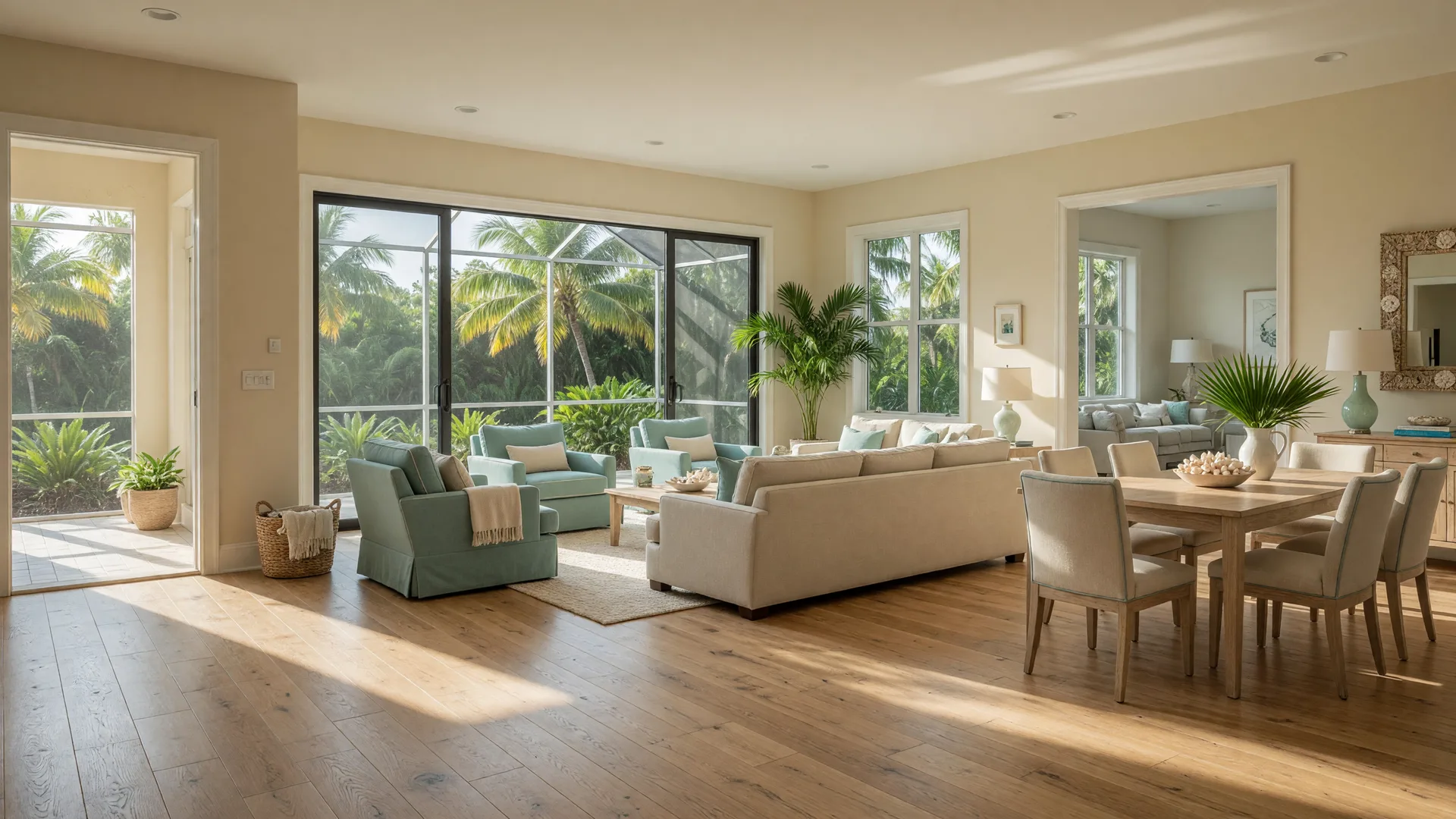
Aging in Place in Florida: Home Features to Look For When You Downsize
Written by Kim Donahue, REALTOR® with Medway Realty | 30+ Years of Real Estate Experience · Updated September 7, 2026
Aging in place means staying in your own home as you get older rather than moving into a care setting, and it is what a growing number of downsizers in Sarasota, Manatee, and Charlotte Counties tell me they want. According to AARP's 2024 Home and Community Preferences Survey, 75% of Americans 50 and older want to remain in their current home as they age. That is why the smartest version of right-sizing is choosing a home you could grow into, not just one that fits today. Here is what to look for.
What Does Aging in Place Actually Mean?
In plain terms, it means planning a floor plan and surroundings so you can keep living in one place with little or no remodeling down the road. It does not require a big house or medical-grade equipment. It requires the right basics: a single-level layout, safe entries, good lighting, and bathrooms you can use with confidence for decades.
The question people rarely ask themselves before they buy is the one that decides whether they stay: could I live in this home comfortably if my mobility changed? That is the lens worth holding through every tour you take.
What Home Features Matter Most? A Downsizer's Checklist
- Main-floor living. A primary suite and a full bath on the first floor, ideally with the entry, kitchen, and laundry all on one level, so nothing essential requires stairs.
- No-step entries. A garage-to-house and patio-to-house entry without steps. A graded walkway or low threshold costs little at purchase and a great deal to retrofit later.
- Wide doorways and halls. Doorways roughly 32 inches or wider, enough for a walker or a wheelchair, with smooth transitions between rooms instead of raised thresholds.
- Lever handles. Lever-style handles on doors and faucets are far easier than round knobs for hands that grip less firmly.
- A realistic shower. A low- or zero-threshold walk-in shower with non-slip flooring, a built-in seat or space for one, and a handheld showerhead. Grab bars anchored into wall studs near the toilet and in the shower are far safer than decorative bars screwed into drywall.
- Comfort-height fixtures. Toilets around 17 to 19 inches tall, and lighting that gets brighter, with motion-sensor lights in halls and closets so nighttime trips are safer.
How Much Do Aging-in-Place Updates Cost?
Sizable, but manageable when you plan. A single grab bar runs about $30 to $60 if you install it yourself, or $100 to $400 installed. Widening a doorway runs roughly $600 to $2,000. Industry estimates put the average whole-home aging-in-place remodel near $9,500, and figure on $15,000 or more when you are moving walls or adding an elevator. For a professional read on what to prioritize, a Certified Aging-in-Place Specialist (CAPS), a designation created by the National Association of Home Builders with AARP, typically charges around $500 for a home assessment.
The most cost-effective moment to get these features is when you are shopping, not after you own. A home that already has a first-floor bedroom, a no-step entry, and wide doors saves you thousands before you ever buy a grab bar.
How Do You Find a Right-Sized Home You Can Stay In?
Across Sarasota, Manatee, and Charlotte Counties, that checklist points to the home types my downsizing clients buy most: single-story villas and ranch-style condos, 55-plus communities where the HOA covers exterior paint, lawns, and common areas, and newer construction with first-floor primary suites and low-maintenance finishes. But the most important move is mental, not architectural. When I walk through a listing with you, I ask the questions that matter ten years from now: Is the bedroom and bath on the main floor? Is there a step-free path from the garage? Do the doors and halls clear a walker? What does the HOA maintain, and what will that mean for my budget every single year? Where is the nearest hospital and urgent care, and is the drive easy at night?
When you right-size with those answers in hand, you stop reacting to the home you are leaving and start planning for the home you will live in for the long run. I walk the details with you before you make an offer, from insurance and flood zones to HOA rules and timelines, across the whole tri-county region. It is the small print, not the square footage, that decides whether you stay comfortably for twenty years or just the next two.
Right-sizing for the long run in Southwest Florida?
I help downsizers find single-level homes and communities built for aging in place across Sarasota, Manatee, and Charlotte Counties, and I coordinate the sale of your current home on the way. Reach out for a conversation, or read more in my downsizing guides. No pressure, no timeline.
With Kim Donahue, REALTOR® with Medway Realty: 941-724-2587 · kim@kimdonahue.com. License SL3352997.