
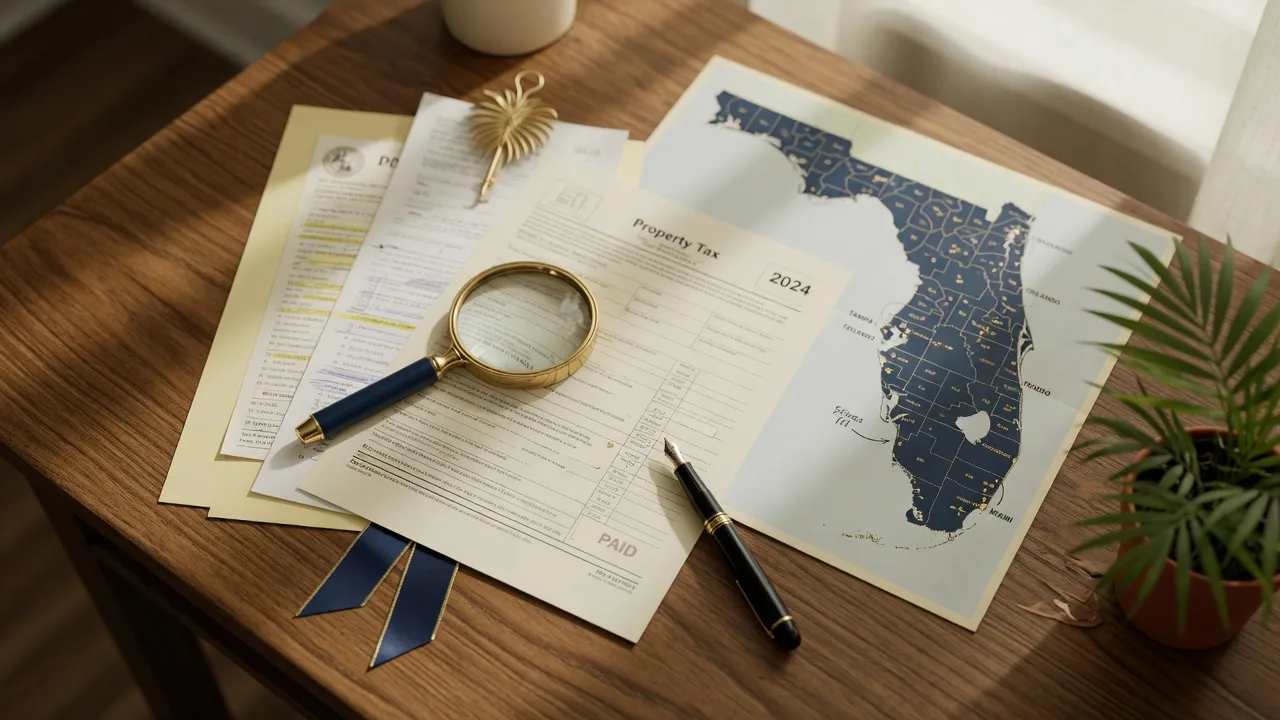
How the Florida Homestead Exemption Works — and Why It Matters When You Move
Written by Kim Donahue, REALTOR® with Medway Realty | 30+ Years of Real Estate Experience · Updated July 2, 2026
One of the most common questions I hear from people relocating to Florida is: "What is the homestead exemption, and how does it actually work?" It's a fair question — the answer involves several layers, and the benefits are significant enough that understanding them before you buy can save you real money every year.
If you're moving to Sarasota, Manatee, or Charlotte County from out of state — or buying your first Florida home — here's a clear breakdown of how the homestead exemption works, how the Save Our Homes cap protects you long-term, and how portability lets you carry your benefit when you sell and buy again.
What is the Florida homestead exemption?
The homestead exemption reduces the assessed value of your primary residence for property tax purposes. In Florida, it works in two tiers:
- The first $25,000 of your home's assessed value is exempt from all property taxes — county, city, school district, and every other taxing authority.
- The second $25,000 (on the portion between $50,000 and $75,000 of assessed value) is exempt from all taxes except school district taxes.
That means your total exemption is effectively up to $50,000 off the assessed value. For most homeowners in the Sarasota area, that translates to annual savings in the range of $500 to $1,000 or more, depending on local millage rates. It's not a trivial amount — and it adds up every year you own the home.
How does the Save Our Homes cap work?
The homestead exemption gives you an immediate reduction. The Save Our Homes (SOH) cap is what protects you over time. Here's the key: once you homestead a property in Florida, the assessed value of that property can only increase by up to 3% per year — or the year-over-year change in the Consumer Price Index (CPI), whichever is lower.
This matters because your home's market value might increase significantly over time — in many Sarasota-area neighborhoods, property values have risen substantially over the past decade. But your tax assessment is capped. Over several years, a meaningful gap develops between what your home is worth and what you're actually taxed on. That gap is called your SOH benefit, and it's the real long-term value of homesteading in Florida.
For example: if you bought a home for $400,000 ten years ago and it's now worth $600,000, your assessed value might still be in the low $500,000s — saving you hundreds of dollars every year compared to being assessed at full market value.
What is portability, and how does it work?
Portability is the provision that lets you transfer your accumulated SOH benefit from one Florida homestead to another. If you sell a home you've homesteaded in Sarasota and buy another home in Florida, you don't lose the tax benefit you've built up — you carry it forward.
Here's how the transfer works:
- Upsizing: If your new home's market value is equal to or greater than your old home's market value, you can transfer the full SOH benefit — up to a cap of $500,000.
- Downsizing: If your new home costs less than your old one, the transfer is prorated based on the ratio of the new home's value to the old home's value. For instance, if your SOH benefit is $100,000 and you move to a home worth two-thirds of what you sold, you can transfer roughly $66,000 of that benefit.
This is where the details matter. If you're a long-time Sarasota homeowner who is downsizing within the area — moving from a $700,000 home to a $450,000 condo, for example — a prorated portion of your accumulated benefit still comes with you. You don't start from zero.
Is the portability transfer automatic?
No. This is one of the most important details. You must file Form DR-501T with the county property appraiser's office to claim portability. It is not automatic, and there is a deadline: you need to apply within three tax years of selling your previous homestead property.
In practice, I recommend filing as soon as you purchase your new Florida home. Waiting increases the risk of missing the window or losing track of documentation from your previous county.
Who qualifies for the homestead exemption?
You qualify if you own the property and make it your permanent legal residence. For most buyers, this means establishing Florida as your domicile — getting a Florida driver's license, registering to vote in Florida, and filing for the exemption with the county property appraiser. The exemption applies to one property only: your primary residence.
You must apply by March 1 of each year, though new homeowners who just closed on a purchase have until a later deadline (typically 30 days after the tax bill is mailed). Don't miss it — the exemption is retroactive to January 1 of the tax year, but only if you file on time.
Does the exemption apply to property taxes only?
Mostly, yes. The homestead exemption reduces your assessed value for tax purposes. It does not eliminate property taxes entirely — you're still responsible for taxes on the assessed value above the exemption. However, it also provides additional protections under Florida law, including certain creditor protections. Homestead property is generally shielded from forced sale by most creditors, which is a meaningful legal benefit beyond the tax savings.
How does this affect someone relocating from out of state?
If you're moving from Michigan, New York, New Jersey, or any other state, the Florida homestead exemption is one of the most immediate financial benefits of the move. Your new assessed value starts with the purchase price, and from that point forward, the Save Our Homes cap protects you from tax increases driven by market appreciation.
The longer you stay, the more valuable the cap becomes. And if you eventually move to another Florida property, portability lets you carry that accumulated benefit with you. It's one of the reasons that buying a home in Florida — even at a higher price point — can be cost-advantaged over time compared to renting.
These are the kinds of details that affect your monthly budget and your long-term financial picture. Understanding them before you buy — not after — makes the entire process clearer. For a full breakdown of what homeownership actually costs each month, see my guide to the true monthly cost of buying a home in Florida. And if you're comparing areas within the tri-county region, my cost of living in Sarasota guide provides a realistic breakdown of housing, taxes, utilities, and daily expenses.
I walk clients through these questions regularly as part of the buying process. For a broader look at what buying a home in Sarasota involves, see my Buying Guide, or if you're considering a move from out of state, my Relocation Guide. For answers to common buyer questions, browse my Buying FAQ.
If you have questions about how the homestead exemption or portability applies to your situation, I'm glad to walk through it with you. You can reach me at (941) 724-2587 or schedule a consultation.