
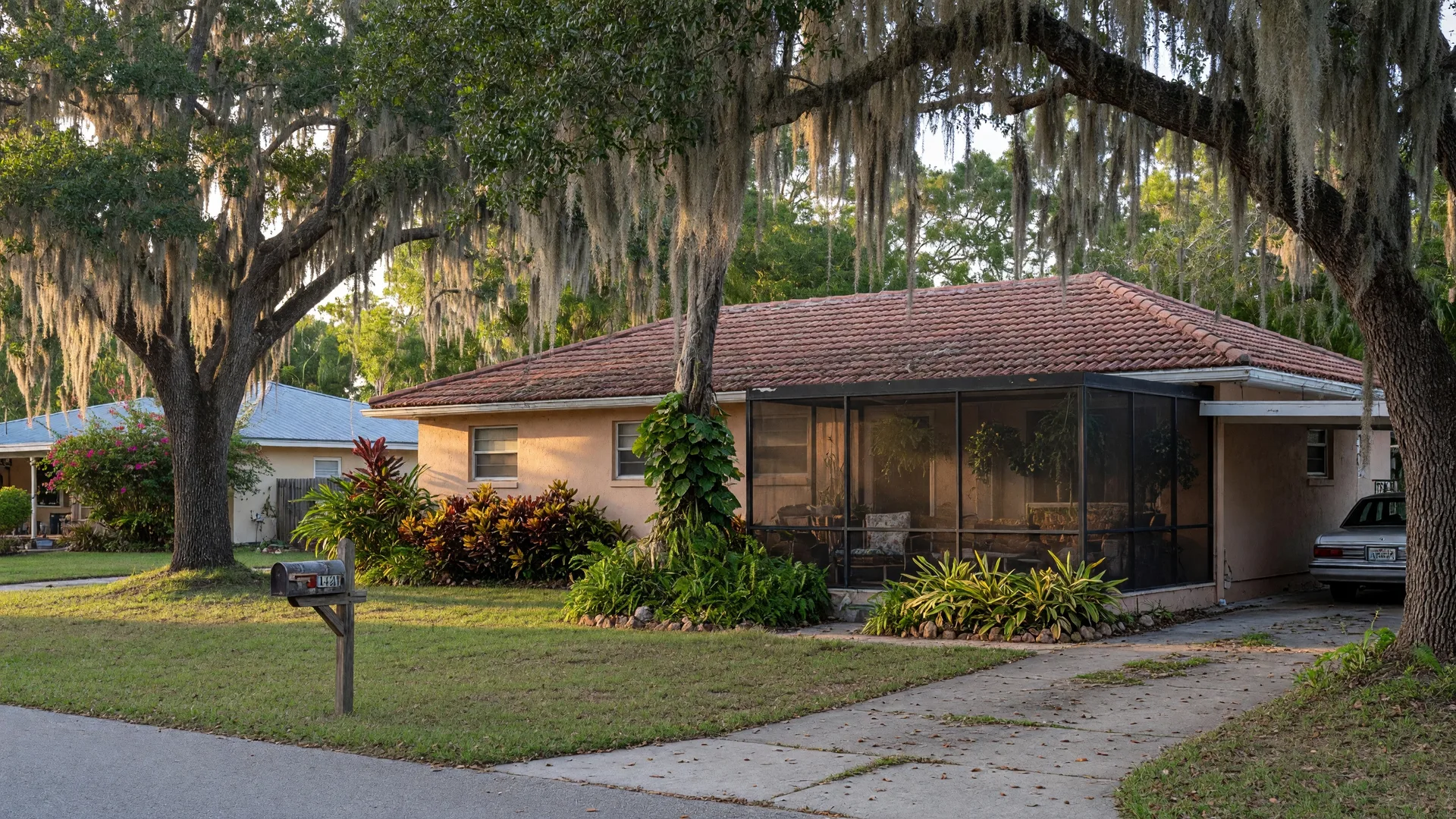
Selling an Inherited Home in Sarasota, Manatee, and Charlotte Counties: A Step-by-Step Guide
Written by Kim Donahue, REALTOR® with Medway Realty | 30+ Years of Real Estate Experience · Updated July 15, 2026
"How do I sell a home I inherited in Florida?" — I hear this question from clients more often than most people realize. It usually comes at a difficult time, often right after losing a parent or spouse. The person asking is already carrying grief, and now they're facing a property they didn't choose, in a state they may not live in, with tax and legal questions they never expected to navigate.
If that's where you are right now, here is a clear, grounded guide to what selling an inherited home in Sarasota, Manatee, or Charlotte County actually involves — the steps, the timeline, the costs, and the people you'll need on your side.
Do I need to go through probate first?
This is the first question, and the answer depends on how the property was titled. In Florida, if the home was held in a living trust, it typically passes outside of probate, and you can move forward with the sale more directly. If the home was solely in the deceased person's name with no joint owner or beneficiary designation, probate is almost certainly required before the property can be sold.
Probate in Florida is handled through the circuit court in the county where the deceased lived. For Sarasota County, that's the Sarasota County Courthouse. For Manatee County, it's the Manatee County Courthouse in Bradenton. Charlotte County has its own probate division as well. The process takes anywhere from a few months to a year, depending on complexity and whether the estate is contested.
What you need to do first: Locate the will (if there is one), identify the personal representative or executor, and consult a Florida probate attorney. This is not a step to handle on your own. A good probate attorney will tell you exactly what documents are needed and how long your specific county's process typically takes.
What taxes will I owe when selling an inherited home in Florida?
Florida has no state income tax, so you won't face a state-level tax on the sale of an inherited property. The federal question is more nuanced.
The key concept here is stepped-up basis. When you inherit a home, its tax basis is "stepped up" to its fair market value on the date of the owner's death — not what they originally paid for it. This means if you sell the home shortly after inheriting it, and the sale price is close to that stepped-up value, your capital gains tax liability is minimal or zero.
For example: if your mother bought the home in 1985 for $120,000, and it was valued at $450,000 when she passed, your basis is $450,000. If you sell it for $460,000, you're only taxed on the $10,000 gain, not the $340,000 difference from the original purchase price.
A tax professional or CPA who understands Florida real estate and inheritance tax rules can give you a precise estimate. I work with several local CPAs who specialize in exactly this scenario and am glad to make introductions.
How do I handle the contents of the home?
This is often the hardest part emotionally. A home that held a parent's life for 30 or 40 years contains decades of belongings — furniture, photographs, kitchenware, clothing, and the small objects that carry the most memories. For someone who lives out of state, going through it all is both logistically complicated and emotionally draining.
Here is the approach that has worked best for the families I've helped:
Take what matters first. Before you do anything else, go through the home and identify personal items, photographs, heirlooms, and documents you want to keep. Do this before the estate sale company arrives or the donation trucks show up.
Bring in a professional estate sale company. A good estate sale company handles the sorting, pricing, and sale of everything in the home, takes their commission (typically 30% to 40%), and removes what doesn't sell. I have a short list of trusted estate sale professionals in Sarasota, Manatee, and Charlotte Counties who are respectful, organized, and fair.
Donate what's usable. Organizations like Goodwill, Salvation Army, and Habitat for Humanity ReStore in Sarasota accept household goods and furniture. You can request a donation receipt for tax purposes.
Dispose of the rest. For what can't be sold or donated, a junk removal service like Junk King or a local hauling company in your county can clear the remaining contents. This is usually the last step before listing the home.
How do I prepare the home for sale when I live out of state?
This is the most common scenario I see. The heirs live in another state — Ohio, Michigan, Illinois, New York, Pennsylvania — and the inherited property is in Sarasota, Bradenton, North Port, or Port Charlotte. They can't be here to manage contractors, meet inspectors, or coordinate showings.
In that situation, here's what a responsible sale typically requires:
A property inspection and quote for repairs. Most inherited homes have deferred maintenance — an aging roof, an air conditioning system past its prime, or plumbing that hasn't been updated. An honest pre-listing inspection gives you a clear picture before you decide how to price the home.
Decisions on repairs. Not every repair needs to be made before selling. Some homes sell best in as-is condition with a price that reflects the needed work. Others benefit from targeted repairs — particularly items that would fail a buyer's inspection and derail a deal at the last minute. A roof with three to five years of life left, for example, often doesn't need replacement. An AC unit that doesn't cool effectively or a roof that leaks probably does.
Cleaning and staging. An empty home shows its best features, but it also shows every flaw. A light cleaning, a fresh coat of neutral paint in high-traffic areas, and professional photography can make a significant difference in how the home is perceived by buyers.
This is where having a local Realtor who coordinates everything becomes essential. I manage the contractor calls, the inspections, the cleaning crews, and the showings — so my out-of-state clients don't have to.
What if siblings disagree about selling the property?
This comes up more often than people expect. One sibling wants to sell immediately. Another wants to keep the home as a family vacation property. A third is emotionally attached and can't face the decision at all.
Florida law allows any co-owner of a property to file a partition action, which is a court-ordered sale when heirs cannot agree. But a partition lawsuit is expensive, time-consuming, and emotionally destructive to family relationships. Before going that route, I've seen families resolve these disagreements through a facilitated conversation with a neutral third party — a mediator, a family counselor, or simply a real estate professional who can lay out the practical and financial implications of each option in plain terms.
My role in these situations is to provide the numbers and the timeline so the family can make an informed decision together. I don't push for a sale. I lay out the options and let the family decide what's right for them.
How does selling an inherited home affect the estate sale timeline?
The timing of the home sale often interacts with the broader estate settlement. If the estate needs cash to pay debts, taxes, or legal fees, the sale may need to happen sooner rather than later. If the estate is financially stable and the heirs are not in a rush, waiting for the right market window can make sense.
In Sarasota, Manatee, and Charlotte Counties, the real estate market has its own seasonal rhythm. Spring and early summer typically see the most buyer activity. Late summer and fall tend to be slower. Winter — particularly January through March — brings snowbirds and seasonal buyers who are serious about purchasing. I can help you understand where we are in that cycle and what it means for your specific property.
What is the first step?
The first step is not finding a real estate agent. The first step is getting the legal and tax picture clear. Speak with a Florida probate attorney to understand what's required in the county where the deceased lived. Speak with a CPA or tax professional about the stepped-up basis and what your tax liability would look like under different sale scenarios.
Once you have that foundation, you can make clear decisions about the property itself — whether to sell, when to sell, and what condition the home needs to be in for the best outcome.
I'm happy to be the second call, after the attorney and the CPA. I can provide a market valuation for the property, a realistic picture of what it would take to get it ready for sale, and a timeline that coordinates with the legal and tax work you're already doing. There is no pressure to list. I've helped families in Sarasota, Manatee, and Charlotte Counties navigate this process many times, and I know how to handle it with the patience and clarity it deserves.
You can reach me at (941) 724-2587 or schedule a conversation. I'm Kim Donahue, REALTOR® with Medway Realty — license SL3352997 — and I help families across Sarasota, Manatee, and Charlotte Counties navigate the real details of buying and selling, especially during life's harder transitions.