
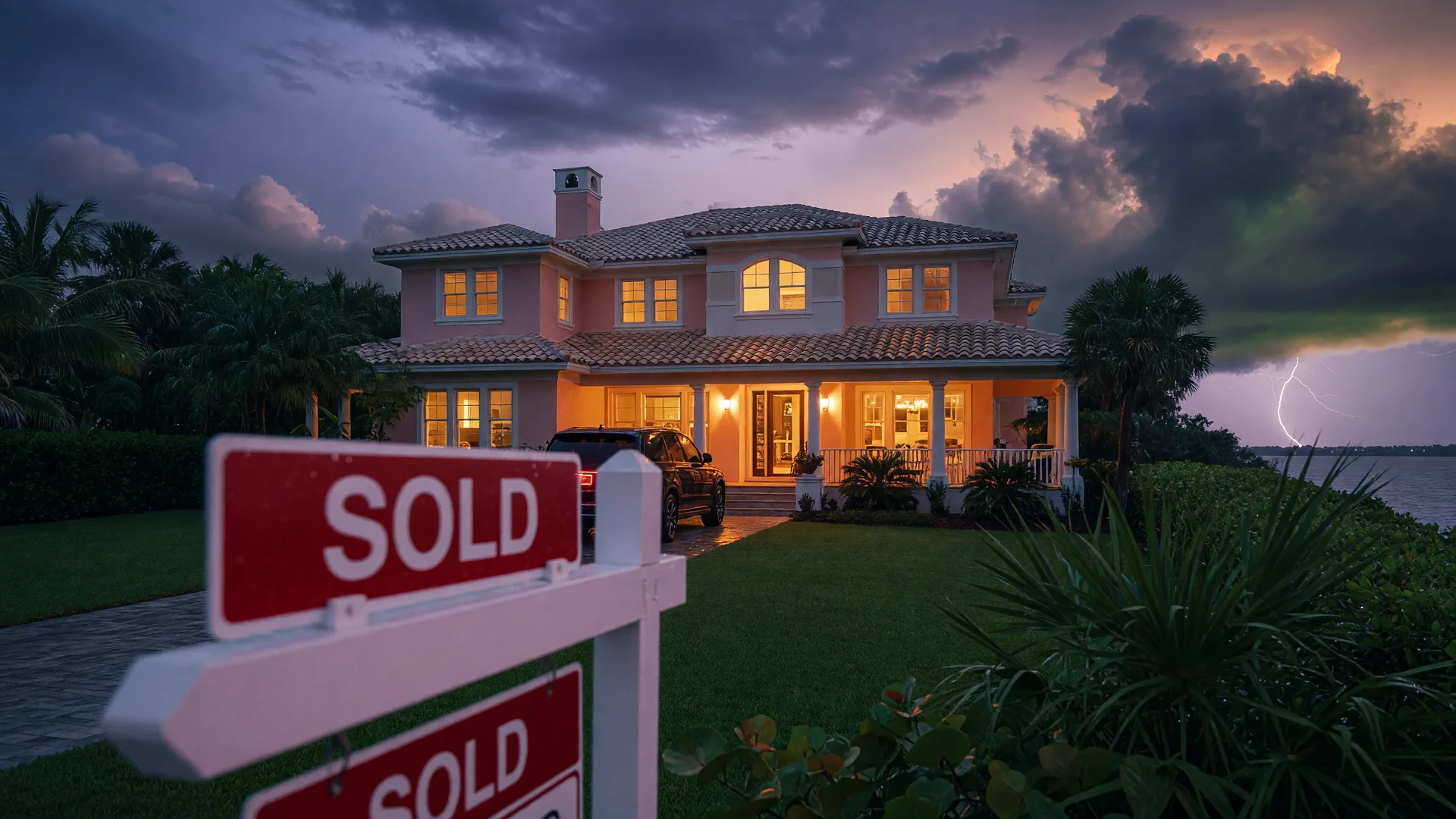
The Dark Side of Real Estate: The Part Nobody Posts About
Written by Kim Donahue, REALTOR® with Medway Realty | 30+ Years of Real Estate Experience · Updated August 14, 2026
If you follow enough real estate agents on social media, you would probably think this business is one big highlight reel.
JUST SOLD.
UNDER CONTRACT.
MULTIPLE OFFERS.
CLOSED!
Another happy client!
Beautiful homes. Smiling faces. Keys at the closing table. Champagne. Sold signs.
And yes, those moments are absolutely part of real estate. I love celebrating them just as much as anyone.
But after more than three decades in this business, I can tell you something else:
There is an entirely different side of real estate that almost nobody posts about.
The deals that fall apart.
The clients who change their minds.
The inspections that scare people.
The negotiations that go nowhere.
The hundreds of phone calls, emails, texts, miles driven, appointments, research, paperwork, negotiations, and hours invested into a transaction that sometimes ends with absolutely nothing.
No closing.
No commission.
No JUST SOLD graphic.
Just another lesson.
And recently, I experienced one of those lessons firsthand.
25+ Homes in Two Days
I was working with buyers who were serious about finding the right property.
We didn't casually look at three or four homes and call it a weekend.
We went to work.
In two days, I showed them more than 25 properties.
Think about what goes into that from an agent's side.
Researching properties. Coordinating showing appointments. Mapping out routes. Communicating with listing agents. Reviewing disclosures. Looking at neighborhoods. Driving from property to property. Discussing values, locations, condition, resale potential, insurance considerations, HOA information, and everything else that goes into helping someone make an educated decision.
Eventually, we found it.
The one.
Then the real work started.
We negotiated aggressively for my buyers and ultimately secured approximately $21,000 off the asking price PLUS another $10,000 in closing-cost concessions.
That's roughly $31,000 in negotiated value for my clients.
I was thrilled for them.
We were under contract.
Then came the inspection.
And that is when something happened that I believe we're going to see much more often in real estate.
ChatGPT Entered the Transaction
Suddenly, I began receiving communications that were clearly being generated with the assistance of artificial intelligence.
The property was supposedly overpriced.
The inspection was supposedly terrible.
Certain conditions were being characterized as dangerous.
Conclusions were being drawn about the property that didn't necessarily include all of the context surrounding the home, the negotiations, the local market, comparable properties, or what had already been negotiated into the transaction.
And here's where this story becomes important.
I use ChatGPT.
I use AI constantly in my business.
I think artificial intelligence is one of the most incredible productivity tools we've been given in decades. It can help analyze information, organize thoughts, research questions, create systems, explain complicated topics, brainstorm solutions, and help consumers become more educated.
But there is an enormous difference between using AI to help you ask better questions and allowing AI to make the decision for you.
AI only knows the information it has been given.
It hasn't physically walked through the house.
It hasn't smelled something unusual when entering a room.
It hasn't stood outside and heard the traffic.
It hasn't driven the neighborhood at 8:00 at night.
It hasn't watched how buyers react to competing properties.
It doesn't know every conversation that took place between the agents.
It doesn't automatically know the motivation of the seller.
It doesn't necessarily understand why one comparable property sold for more than another.
And unless you provide every piece of relevant information, it may be analyzing only part of the story.
Artificial intelligence can process information. It cannot replace experience, context, judgment, or human relationships.
When Communication Changed
Eventually, my clients stopped communicating with me by phone.
The transaction became increasingly difficult, and ultimately they made the decision to terminate the purchase contract and our buyer agency relationship.
And yes, after everything that had gone into finding and negotiating that property, it was disappointing.
I'm human.
Real estate agents are human.
We invest enormous amounts of time and energy into the people we represent, often long before we know whether we'll ever receive a paycheck.
In most traditional real estate transactions, I don't get paid for showing you the first house.
Or the fifth.
Or the twenty-fifth.
I don't receive a paycheck when I negotiate the contract.
I don't get paid for answering texts at night, researching properties early in the morning, reviewing inspection reports, talking with lenders, coordinating inspectors, negotiating repairs, communicating with title companies, or solving the hundred little problems that can happen between contract and closing.
Generally, I get paid when the transaction closes.
If it doesn't close?
I may have invested days, weeks, or even months into helping someone without earning anything.
That's part of the risk we accept when we choose this profession.
Professionalism Doesn't End When the Deal Dies
Here's the part I'm actually most proud of.
When my clients decided to terminate, my responsibilities didn't suddenly disappear simply because there would no longer be a commission at the end.
I continued helping them.
I assisted with the termination process.
I helped with the earnest money process.
I continued fulfilling my professional and fiduciary responsibilities through the end of the relationship.
Because character isn't demonstrated when everything is going your way.
It's demonstrated when it isn't.
Anyone can be cheerful when the closing statement has a commission check on it.
Professionalism is how you behave when the transaction falls apart.
That's the part of real estate Instagram doesn't usually show you.
Man vs. Machine?
I joked afterward:
Man vs. Machine: 0-1.
But the truth is, I don't believe this should ever become humans versus artificial intelligence.
I think the future belongs to people who understand how to use both.
I don't want my clients to be afraid of ChatGPT.
Use it.
Ask questions.
Research neighborhoods.
Learn terminology.
Ask it to explain an inspection item you don't understand.
Ask it what questions you should bring to your Realtor, inspector, lender, insurance agent, attorney, contractor, or title professional.
Use technology to become a better-informed consumer.
But don't outsource your critical thinking.
And don't allow a computer-generated answer based on incomplete information to automatically outweigh the professionals who actually know the property, market, transaction, and circumstances.
The smartest question isn't:
"What does ChatGPT say I should do?"
It's:
"Based on what ChatGPT found, what questions should I now be asking the professionals involved in my transaction?"
That's a completely different approach.
AI Doesn't Have 30+ Years of Real Estate Experience
This is where experience matters.
I've lived through changing markets, recessions, foreclosures, short sales, bidding wars, hurricanes, insurance changes, financing challenges, inspection surprises, appraisal problems, difficult negotiations, and transactions that looked impossible until we found a solution.
I've also watched deals that absolutely should have been terminated.
There are times when walking away is the smartest decision a buyer can make.
My job isn't to convince someone to buy a house just so I can earn a commission.
My job is to help my client understand the information available to them so they can make an informed decision that is right for their life and financial future.
Sometimes that means moving forward.
Sometimes it means renegotiating.
Sometimes it means bringing in another expert.
And sometimes it means walking away.
That's real estate.
The Highlight Reel Isn't the Whole Story
For every JUST SOLD graphic you see from a successful Realtor, there are probably stories behind the scenes you will never hear.
The listing appointment we didn't get.
The buyer who disappeared.
The seller who decided not to move.
The financing that collapsed three days before closing.
The inspection that changed everything.
The appraisal that came in low.
The months spent helping someone who ultimately bought somewhere else.
The transaction that consumed countless hours and never closed.
We don't usually post those.
Maybe we should.
Because I think consumers deserve to understand what this profession actually looks like.
Real estate isn't opening doors and putting signs in yards.
It's problem-solving.
It's negotiation.
It's research.
It's communication.
It's managing emotions.
It's understanding contracts.
It's coordinating professionals.
It's protecting your client's interests.
It's sometimes delivering news people don't want to hear.
And occasionally, it's doing everything right and still watching the transaction disappear.
Then you learn from it.
You get up the next morning.
And you go back to work.
Technology Will Change Real Estate. Relationships Will Still Matter.
AI isn't going away.
And I don't want it to.
I'm excited about what technology can do for this industry and for consumers.
But technology should make us smarter — not make our decisions for us.
Use the data.
Use ChatGPT.
Use Zillow.
Use Google.
Use inspection reports.
Use flood maps.
Use county records.
Use comparable sales.
But then bring those pieces together with experienced professionals who understand what those numbers and reports actually mean in the real world.
The best real estate decisions aren't made by humans OR machines. They're made by informed humans who know how to use the right tools.
And sometimes the right decision still means walking away.
That's okay.
Because not every transaction ends with keys at the closing table.
Not every week ends with a commission check.
Not every client relationship lasts forever.
Sometimes you lose the deal.
Sometimes you learn something.
Sometimes you're reminded exactly why professionalism, experience, communication, and human judgment still matter.
And then you move forward.
That's the dark side of real estate.
It's also the real side.
And after more than three decades in this business, I wouldn't trade the lessons I've learned from either side of it.
Thinking About Buying or Selling?
Whether you're buying your first home, relocating to Florida, selling a property, downsizing, investing, or simply trying to figure out your next move, you deserve more than someone who opens a door and writes a contract.
You deserve an experienced Realtor who will help you research the details, understand your options, ask the difficult questions, negotiate on your behalf, and tell you the truth — even when the truth doesn't lead to a commission check.
Let's create a strategy around what's best for YOU.
Connect with Kim Donahue
Your Realtor with a Heart to Serve
Medway Realty
941-724-2587
Kim@KimDonahue.com
KimSellsSarasota.com
Frequently Asked Questions
What happens when a real estate deal falls apart?
When a real estate deal falls apart, it can be disappointing for everyone involved. The agent may have invested days, weeks, or even months into helping a client without earning anything. Professionalism means continuing to fulfill responsibilities through the end of the relationship — assisting with the termination process, earnest money, and fiduciary duties even when there will be no commission.
Can AI replace a real estate agent?
AI cannot replace the experience, context, judgment, and human relationships that a qualified real estate agent brings to a transaction. AI can help analyze information, organize thoughts, research questions, and help consumers become more educated. But it hasn't physically walked through a house, smelled something unusual in a room, driven the neighborhood at night, or understood the full context of a transaction. The future belongs to people who understand how to use both technology and human expertise.
Do real estate agents get paid if a deal doesn't close?
Generally, real estate agents do not get paid if a transaction doesn't close. Agents typically earn a commission only when the transaction closes. If a deal falls apart, the agent may have invested days, weeks, or even months of work — showings, negotiations, inspections, research, and coordination — without earning anything. That is part of the risk agents accept when choosing this profession.
How does AI affect real estate transactions?
AI can affect real estate transactions in both positive and challenging ways. Positively, AI helps agents and consumers research, organize information, and ask better questions. But there is a risk when AI is allowed to make decisions based on incomplete information, without the full context of the property, market, negotiations, and human factors. The best real estate decisions are made by informed humans who use AI as a tool, not as a decision-maker.
What is the reality of being a real estate agent?
The reality of being a real estate agent goes far beyond opening doors and putting signs in yards. It involves problem-solving, negotiation, research, communication, managing emotions, understanding contracts, coordinating professionals, protecting clients' interests, and sometimes delivering news people don't want to hear. Many deals fall apart behind the scenes, and agents invest enormous time and energy often long before knowing whether they'll receive a paycheck. Professionalism is how an agent behaves when things don't go smoothly.
Contact Kim Donahue: kimdonahue.movetosarasotafl.com
Phone: 941-724-2587
If you are going through a season of transition — whether you are downsizing, relocating to Southwest Florida, or simply wondering what comes next — I would be honored to walk alongside you. Learn more about me, read what clients have to say on my reviews page, or reach out for a conversation. No pressure, no timeline.