
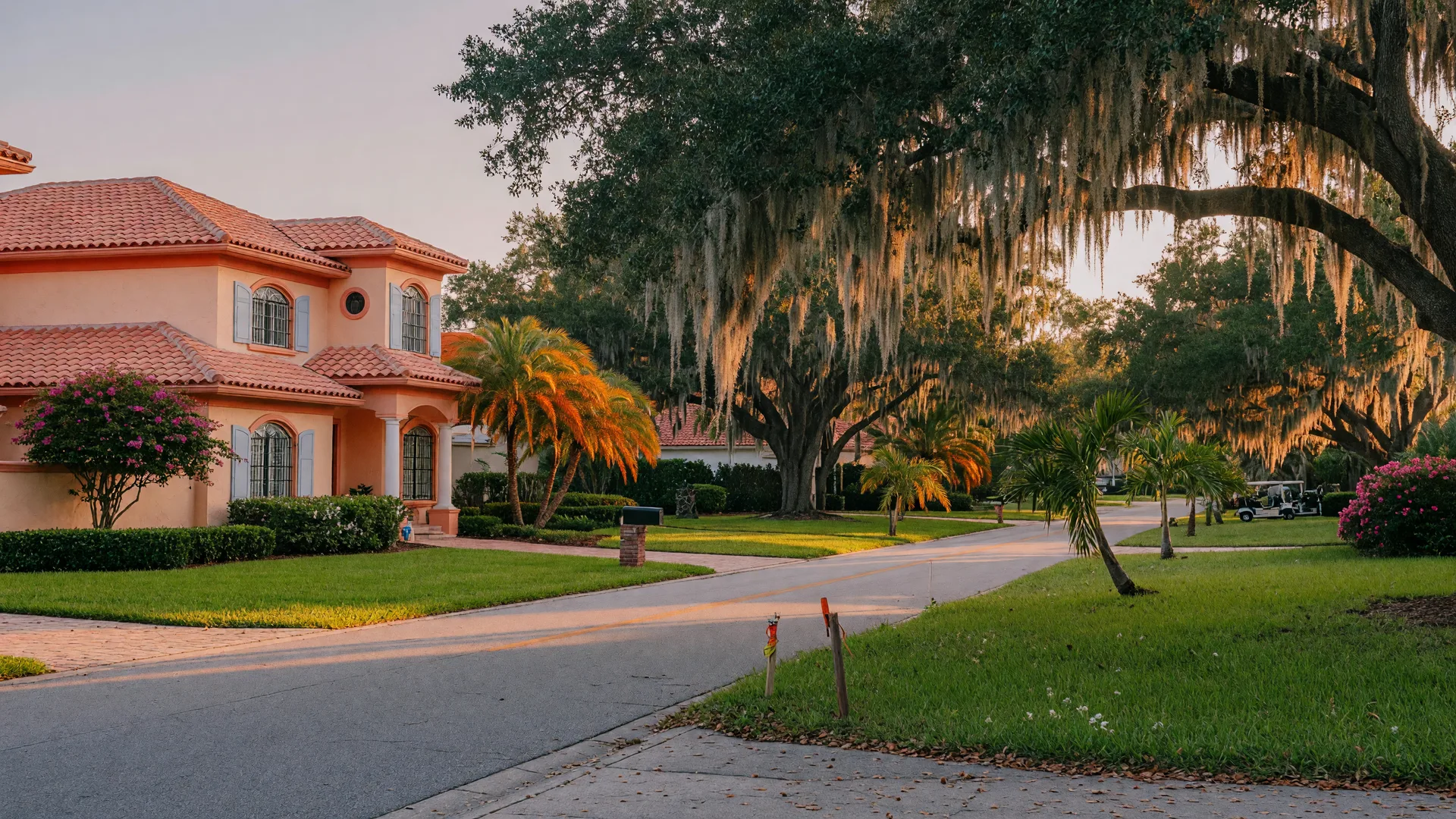
The House Isn't the Only Thing You're Buying: What Smart Buyers Check Before Making an Offer
Written by Kim Donahue, REALTOR® with Medway Realty | 30+ Years of Real Estate Experience · Updated August 22, 2026
You walk through the front door and immediately start imagining your life there.
The kitchen is beautiful. The primary bedroom has the space you wanted. There's a backyard for the dogs, a pool you can picture yourself enjoying on a Saturday afternoon, and maybe even that Florida lanai you've been dreaming about.
You start thinking about where the furniture will go.
You're already mentally decorating.
And before you know it, you're asking me one of the most common questions I hear from buyers:
"Kim, what do you think we should offer?"
But before we start talking about an offer, I want to talk about something much bigger than the house.
What are you actually buying?
Because when you purchase real estate, the house isn't the only thing you're buying.
You're buying the street.
You're buying the neighborhood.
You're buying the traffic.
You're buying the noise.
You're buying the HOA.
You're buying the drainage patterns.
You're buying whatever is across the street, behind the backyard, and potentially whatever could be built next door five years from now.
And you're buying the lifestyle that comes with all of it.
A beautiful house can be renovated.
A kitchen can be remodeled.
Flooring can be replaced.
Paint can be changed.
But you cannot pick up your house and move it three streets over because you discovered after closing that Friday-night traffic is unbearable.
That's why I want my buyers looking beyond the listing photos.
After more than three decades around real estate, one thing I know for certain is this:
The listing shows you the house. My job is to help you understand what you're actually buying.
Fall in Love With the House — Then Investigate the Street
There is absolutely nothing wrong with falling in love with a home.
Real estate is emotional.
A home represents security, family, memories, retirement, financial stability, and sometimes an entirely new chapter of your life.
But emotion should get a vote.
It shouldn't get the only vote.
Once we find a house you love, that's when we start looking beyond the front door.
One of the simplest things I recommend is also one of the things buyers frequently skip:
Drive the neighborhood at different times.
If possible, don't just visit during your scheduled showing.
Go back.
Drive through during rush hour.
Go back on a Friday night.
Drive through again on a Sunday morning.
You may be amazed at how different the same street can feel depending on the day and time.
1. Look at the Neighboring Properties
When you're touring the house, don't just look at the house.
Look left.
Look right.
Look across the street.
Look behind it.
How are the neighboring properties maintained?
Are lawns and landscaping generally cared for?
Are homes being improved?
Is there significant construction or redevelopment happening?
Are there vacant lots nearby?
This isn't about judging how someone else lives. It's about understanding the environment surrounding what could become one of your largest financial investments.
And remember something important: You can control your property. You usually cannot control someone else's.
2. Find Out What Could Be Built Nearby
That vacant lot next door may look wonderful today. Maybe it gives you a beautiful open view.
One of the questions worth investigating is: What is that property zoned for?
A vacant parcel doesn't necessarily mean it will remain vacant.
Development and land-use rules can change, so buyers should investigate current zoning, future land-use information, pending applications when available, and other relevant public records rather than assuming today's surroundings will always remain the same.
Never assume that the beautiful open space you see today is guaranteed to remain exactly as it is. Research it.
3. Check Flood Information — But Don't Stop at the Flood Zone
Living in Florida means water needs to be part of the conversation. That doesn't automatically make a property good or bad. It means we need information.
Buyers should investigate available flood information and determine what insurance requirements and costs may apply to the property.
But I also want buyers thinking about drainage.
A flood map tells you important information, but it doesn't necessarily tell you everything about what happens on one particular street during a heavy Florida downpour.
Look around. Where does water appear to drain? Are there storm drains? Swales? Retention ponds? Does the property sit noticeably lower than neighboring properties?
Ask questions. And when appropriate, consult qualified insurance professionals, inspectors, surveyors, local authorities, and other specialists who can provide information specific to that property.
4. Stop Talking for a Minute and LISTEN
When you're outside the property, stop talking for a minute. Listen.
Can you hear highway traffic? Airplanes? Trains? Construction? Commercial activity? A busy intersection?
Noise isn't automatically a deal breaker. What might be perfectly acceptable to one buyer could drive another buyer crazy six months after moving in.
That's another reason I like buyers to return to an area more than once.
5. Don't Just Ask, "How Much Is the HOA?"
This is especially important for condominium and HOA buyers.
One of the first questions buyers tend to ask is: "What's the monthly HOA fee?"
That's important. But it's not the only question.
Depending on the property and association, buyers may want to review available financial information, budgets, reserve information, meeting minutes, governing documents, rules, insurance information, pending or recent assessments, and other association records made available for review.
The HOA payment tells you what you're paying today. The association's financial condition and documents can help you better understand what ownership may involve tomorrow.
For Florida condo buyers in particular, association due diligence should never be treated as an afterthought.
6. Research Crime and Public-Safety Information Yourself
This is another area where buyers should do their own research using appropriate public sources.
Don't rely on someone casually saying: "Oh, this is a great neighborhood."
Use available law-enforcement resources, public crime information, and other objective sources to research what matters to you.
My job isn't to decide what neighborhood is right for you. My job is to help you ask better questions so you can make an informed decision.
7. Talk to the People Who Already Live There
Want to learn about a neighborhood? Sometimes one of the best sources is standing two driveways away watering their flowers.
Talk to the neighbors. Introduce yourself. Ask open-ended questions.
What do they like about living there? What do they wish they had known before moving in? How is traffic? How long have they lived there?
You're gathering perspective. Sometimes you'll learn something incredibly helpful. Sometimes you'll simply meet the people who may eventually become your neighbors.
The $50,000 Kitchen Can Distract You From the $500,000 Question
Beautiful homes are designed to make us emotional. Fresh paint. New flooring. Quartz countertops. Beautiful staging. A gorgeous pool. Professional photography.
And suddenly we're staring at the kitchen backsplash instead of asking: "Does this location actually work for my life?"
Imagine buying the perfect house only to discover that your 20-minute commute during the showing becomes 50 minutes every weekday morning.
Cosmetic problems can often be fixed. Location problems usually can't.
The Question I Want My Buyers to Ask
When we're looking at property together, I don't only want you asking: "Do I love this house?"
I want you asking: "Do I love the life that comes with this house?"
Picture a normal Tuesday. Where will you buy groceries? How long will it take to get to work? Where will you walk the dog? How far are you from the people and places important to you?
Don't just imagine vacation life. Imagine everyday life. Because you're not buying a weekend showing. You're buying Monday morning.
You're buying Friday night.
You're buying hurricane season.
You're buying tourist season.
You're buying ordinary life.
And ordinary life is where you're going to spend most of your time.
My Before-You-Buy Street Checklist
- Drive the street during morning or afternoon rush hour
- Visit on a Friday or Saturday evening
- Drive through on a quiet Sunday morning
- Look at the condition of surrounding properties
- Research nearby vacant parcels and applicable zoning/land-use information
- Review available flood information
- Pay attention to drainage and signs of standing water
- Listen for airport, highway, train, commercial, and construction noise
- Carefully review HOA or condominium documents, financial information, reserves, meeting minutes, assessments, and rules
- Research crime and public-safety information through appropriate sources
- Talk to neighbors when possible
- Test your actual commute
- Drive to the grocery store, healthcare providers, airport, beach, schools, restaurants
- Ask yourself one final question: Would I still want this house if the kitchen weren't beautiful?
The Listing Shows You the House. I Want You to Know What You're Actually Buying.
Beautiful photography can show you the pool. It can't show you Friday-night traffic.
The property description can tell you the square footage. It can't tell you whether you enjoy driving that road every morning.
The house isn't the only thing you're buying.
You're buying everything that comes with it.
So fall in love with the house. Then get curious about everything surrounding it. That's how you turn an emotional purchase into an informed real estate decision.
Thinking About Buying in Sarasota, Manatee, Charlotte County or Along Florida's Gulf Coast?
Whether you're buying your first home, relocating to Florida, moving closer to the beach, downsizing, purchasing a condo, or searching for your next waterfront property, I want to help you look beyond the listing photos.
We'll talk about the house and the lifestyle you're trying to create.
We'll build a strategy around your priorities, your budget, your timeline, and the things that matter most to you — so you're not simply buying a property. You're buying the right property for the life you want to live.
For more on the buying process, see my smarter way to buy a home in Southwest Florida and my first-time homebuyer guide for Southwest Florida.
Connect With Kim Donahue
Kim Donahue, REALTOR® | Medway Realty
Your Realtor with a Heart to Serve
Real Estate Experience Architect of Sarasota
(941) 724-2587
Kim@KimDonahue.com
Kim Donahue is a REALTOR® with Medway Realty, serving Sarasota, Manatee, and Charlotte Counties. With over 30 years of experience across real estate, mortgage, and business ownership, she holds designations including SFR, CHSA, CHBA, NAEA member, NAR member, and is a Licensed Notary in Florida (SL3352997).