
What a Home Inspection Actually Reveals About a Florida Home: A Buyer's Guide
Written by Kim Donahue, REALTOR® with Medway Realty | 30+ Years of Real Estate Experience · Updated July 27, 2026
A home inspection is a visual, non-invasive examination of a property's major systems and structure. It is not a pass-fail test. It is a snapshot of the home's condition on the day of inspection, and it gives you the information you need to decide how to move forward.
If you are buying a home in Sarasota, Manatee, or Charlotte County, here is what an inspection typically covers, what inspectors tend to find in Florida homes specifically, and which additional inspections are worth adding to your due diligence.
What a standard home inspection covers
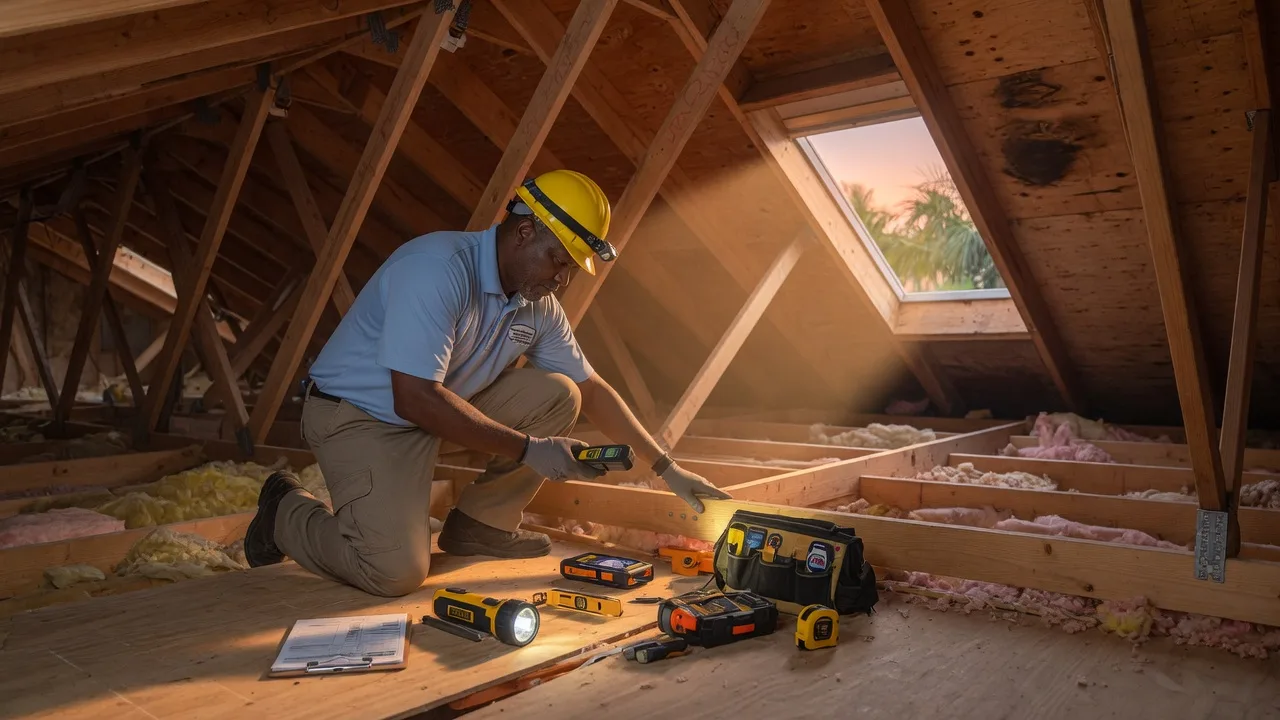
A general home inspection takes between two and four hours, and the inspector examines the property from roof to foundation. The scope includes the roof structure and covering, the exterior walls and grading, the foundation and crawlspace, the electrical panel and visible wiring, the plumbing supply and drain systems, the heating and air conditioning system, the attic insulation and ventilation, the interior walls, ceilings, and floors, doors and windows, and built-in appliances.
In Florida, the typical cost for a standard inspection on a home up to 2,000 square feet runs between $350 and $450 across the tri-county area. Larger or older homes cost more. That fee covers the inspection itself, a detailed written report with photos, and usually a post-inspection phone conversation with the inspector to walk through the findings.
What inspectors find most often in Florida homes
Florida's climate creates a specific set of recurring issues. If you are buying here, these are the findings that show up most regularly:
Roof age and condition
Florida's intense sun, heat, and seasonal storms accelerate roof wear. Insurance carriers increasingly require roof replacement for roofs older than 15 to 20 years, and many policies will not renew coverage on a roof past that threshold. An inspector will note the roof's age, visible wear, and any signs of leaks or prior repairs. This is often the single most significant finding on an inspection report.
HVAC age and performance
Air conditioning systems in Florida run nearly year-round, and their lifespan is shorter than in northern states -- typically 10 to 15 years. Inspectors check the temperature differential, the condensate drainage, and the age of the unit. An aging system may still function but could be near the end of its useful life.
Moisture intrusion and drainage
Moisture-related findings appear in a significant share of Florida home inspections. Stucco cracks, inadequate caulking around windows and doors, poor grading that directs water toward the foundation, and insufficient gutter drainage are all common. In coastal areas, salt air can accelerate corrosion on exterior metal components.
Electrical concerns
Missing GFCI outlets in kitchens, bathrooms, and exterior locations are a frequent finding. Older homes may have outdated electrical panels or signs of corrosion at connections, especially near the coast. These issues are typically straightforward to address but should not be ignored.
Attic ventilation
Proper attic ventilation is critical in Florida's humid climate. Inadequate ventilation can trap heat and moisture, contributing to mold growth and premature roof aging. Inspectors check for sufficient intake and exhaust vents, and this is an area where many homes fall short.
Plumbing and water heater
Homes built between 1978 and 1995 may have polybutylene piping, which is prone to failure. Regardless of pipe material, the inspector will check the water heater's age, condition of the temperature-pressure relief valve, and whether the drain pan is properly installed.
Wood-destroying organisms
Termites and other wood-destroying organisms are present throughout Florida. A separate wood-destroying organism (WDO) inspection is typically ordered alongside the general inspection. Active infestations or prior damage with old repairs are common findings, especially in older wood-frame homes.
Inspections every Florida buyer should add
The standard home inspection covers a lot, but Florida's real estate environment demands a few additional checks. For homes built before 2000, I recommend adding all three of these:
4-Point inspection
This inspection evaluates four specific systems: the roof, electrical system, plumbing, and HVAC. Most insurance companies require a 4-point inspection before issuing a policy on a home older than 20 years. If the 4-point reveals issues, the insurer may require repairs or replacement before binding coverage. The cost is typically $125 to $150.
Wind mitigation inspection
This inspection evaluates features that affect how a home withstands hurricane-force winds: the roof shape, how the roof is attached to the walls (hurricane clips or straps), whether openings have impact-resistant protection, and secondary water resistance. A favorable wind mitigation report can reduce your homeowners insurance premium by 15 to 45 percent. The inspection costs around $75 to $100. It is one of the best values in Florida real estate.
WDO (termite) inspection
As mentioned above, this is a separate, specialized inspection for wood-destroying organisms. Lenders typically require it. Cost is around $75 to $150.
Bundled together -- general inspection, 4-point, wind mitigation, and WDO -- you are looking at roughly $500 to $850 for a thorough due diligence package on an older home. On a newer home (post-2002 construction), the general inspection alone may be sufficient, though a wind mitigation inspection still pays for itself through insurance savings.
How to read the inspection report without panicking
Every inspection report will have findings. That is the point. The question is not whether issues exist -- it is which ones matter and which ones are routine.
Minor findings like a missing outlet cover, a dripping faucet, or a worn weatherstripping are normal maintenance items. Moderate findings like an aging water heater or a cracked window seal are worth noting but rarely a reason to walk away. Major findings -- an active roof leak, a failing AC compressor, signs of foundation movement, or active termite damage -- are what the inspection contingency in your contract is designed to address.
As your agent, I review every inspection report line by line with you. We distinguish between what is genuinely concerning and what is part of owning a home in Florida, then we decide what to request from the seller and what to handle after closing.
What does a home inspection cost in Sarasota, Manatee, and Charlotte County?
Pricing varies by square footage, home age, and the specific inspector, but here are typical ranges across the tri-county area in mid-2026:
- Standard home inspection (general): $350 to $650
- 4-Point inspection: $125 to $200
- Wind mitigation inspection: $75 to $150
- WDO (termite) inspection: $75 to $150
- Bundle (four inspections for older home): $500 to $850
For a practical walkthrough of what else to budget for beyond an inspection, see my guide to the true monthly cost of buying a home in Florida. And for an overview of the entire buying process from start to finish, my first-time home buyer's guide covers inspections, flood zones, HOAs, and insurance step by step.
A home inspection is not something to fear. It is the tool that turns an unknown property into a known one. And when you know what you are buying, you can close with confidence rather than crossing your fingers.
If you are buying a home in Sarasota, Manatee, or Charlotte County and want to understand what to expect at every stage of the process, I would be glad to walk through it with you. Reach me at (941) 724-2587 or schedule a conversation. I am Kim Donahue, REALTOR® with Medway Realty, license SL3352997.