
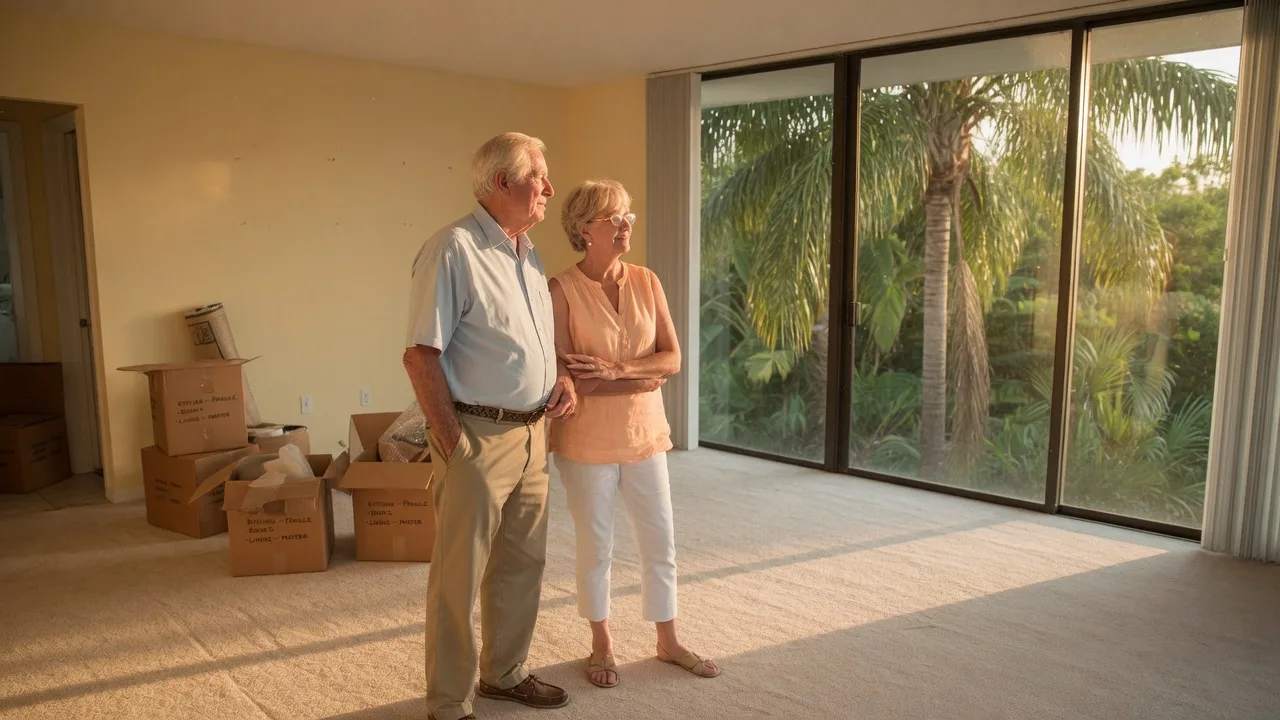
Leaving a Home That Held Decades of Your Life
Written by Kim Donahue, REALTOR® with Medway Realty | 30+ Years of Real Estate Experience · Updated July 27, 2026
Most of the real estate advice you read treats a home sale as a financial transaction. You price it, you stage it, you list it, you close. But for the people who have lived in a home for twenty or thirty years, the transaction is not primarily financial. It is emotional, and it is one of the more complicated chapters of life.
Before they ever contact an agent, most of my clients are carrying more than boxes. They are carrying decades of memories, the weight of deciding what to keep and what to let go of, and often a quiet grief about leaving a place that raised their children, hosted holidays, and held the ordinary daily rituals of a full life.
If you are in that place -- thinking about selling a home you have lived in for a long time -- here is what the emotional side of the process actually looks like, and what I have found helps.
The hardest part is usually the first step
Deciding to leave is often harder than the move itself. The home carries the weight of everything that happened in it, and even when the decision is clearly the right one -- the house is too big, the stairs are becoming difficult, the maintenance no longer makes sense -- there is a difference between knowing something logically and feeling ready to act on it.
Many people wait months or years after recognizing the signs before they make a call. That is normal. There is no timeline that is "right" except your own. For a practical look at the signals that usually precede this decision, see my article on signs it might be time to right-size your home.
How do you sort through decades of belongings?
This is where most people freeze, and for good reason. Every room holds things with stories attached. The kids' artwork, the set of dishes from a relative who has passed, boxes of photographs, furniture that has been in the family for generations. The sheer volume can be paralyzing.
The approach that works best is not to do it all at once. It is to give yourself a realistic timeline -- ideally three to six months -- and work through the home room by room, category by category. I help clients connect with vetted senior move managers, professional organizers, estate-sale companies, and movers who specialize in downsizing transitions. These professionals take the process from overwhelming to manageable.
For a month-by-month guide that walks through exactly what to do at each stage, my downsizing moving timeline breaks it down by room and deadline so you never face it all at once.
The grief you may not expect
Selling a long-time home often brings up feelings that catch people off guard. It is not just the home you are leaving. It is the life you lived in it. The backyard where the kids learned to ride bikes. The kitchen where holiday meals were prepared. The neighborhood where you knew every neighbor.
Those feelings are not a sign you are making the wrong decision. They are a sign that the home mattered. And they tend to surface at specific moments: when you sign the listing agreement, when the For Sale sign goes in the yard, when you walk through the empty house after the movers have left, and sometimes at the closing table itself.
The best thing you can do is give yourself permission to feel it, and to work with someone who understands that the transaction has a human side. I have been through this with enough families to know that the moments of quiet grief are not something to push through. They are something to honor, and then to turn toward what comes next.
How I help navigate the transition
My role in these situations goes beyond pricing and marketing. I help with the coordination that makes the difference between a stressful move and a supported one:
- Connecting you with trusted organizers, estate-sale professionals, and downsizing specialists before you list
- Coordinating the timing between selling and buying so you are never without a place to land -- or carrying two housing payments at once
- Providing plain-language guidance on Florida-specific details that add stress if left until the last minute: insurance, homestead exemption portability, HOA transfer fees, and the closing timeline
- Staying present through the final walkthrough and moving day, not disappearing after the contract is signed
I also help with the practical decisions that trip people up. When you are downsizing from a home you have owned for decades, the pricing conversation is different. So is the decision about what to repair before listing versus what to leave for the next owner. And the question of where to go next -- what kind of home fits how you actually live now, not how you lived ten years ago -- requires a different kind of listening than a typical buyer consultation.
What if you are relocating to Florida from out of state?
Many of my clients are not just leaving one home. They are leaving an entire state and a community they have been part of for decades. The decision to retire to Florida often follows years of planning, but the actual transition -- choosing a community, buying a home from a distance, navigating what is different about Florida real estate (insurance, flood zones, 55-plus community rules, homestead exemption) -- can feel overwhelming from a thousand miles away.
I work with relocators from Michigan, Ohio, Illinois, New York, Pennsylvania, and across the Northeast. For a broader look at what to expect, my guide to what retiring to Sarasota is really like covers the honest, day-to-day reality. For those coming from a specific state, my moving from Michigan, Ohio, and New York guides cover state-specific comparisons on taxes, cost of living, and the climate adjustment.
The other side of the transition
I have watched enough clients go through this to know that the anxiety usually peaks before the move, not after. Once the sorting is done, the boxes are unpacked, and the new routine settles in, most people tell me the same thing: "I should have done this sooner."
Not because the old home did not matter. It did. But because the new chapter turned out to be lighter, simpler, and more aligned with who they are now -- not who they were thirty years ago. For many downsizers in Sarasota, Manatee, and Charlotte County, that next chapter includes a walkable downtown, a 55-plus community with built-in social life, or a waterfront condo with no exterior maintenance and views that make every evening feel like a mini vacation.
If you are starting to think about what that next chapter could look like, and you want someone who understands both the practical logistics and the emotional weight of the decision, I would be glad to sit down and talk. No pressure. No timeline. Just an honest conversation about where you are and what might come next.
Call me at (941) 724-2587 or schedule a conversation. I'm Kim Donahue, REALTOR® with Medway Realty, license SL3352997, serving Sarasota, Manatee, and Charlotte Counties.