
Moving from New York to Sarasota: What to Expect in 2026
Written by Kim Donahue, REALTOR® with Medway Realty | 30+ Years of Real Estate Experience · Updated July 12, 2026
New Yorkers are relocating to Sarasota in larger numbers than I've seen in any prior year, and the reasons are consistent: they're looking for lower taxes, a warmer climate, more space for their money, and a pace of life that gives them their time back. I help people make this move regularly, and the pattern is almost always the same — they've been thinking about it for years, and when they finally visit, they wonder why they waited so long.
If you're in New York and considering the move, this guide covers the practical details — what it actually costs, what the real estate market looks like, which neighborhoods make sense for New Yorkers, and the steps involved in making the transition. No hype, no sales pitch. Just what I'd tell you if we were sitting across the table from each other.
Why are so many New Yorkers moving to Sarasota?
The short answer is that the financial and lifestyle math works. New York State's top income tax rate reaches 10.9%, and New York City adds its own local tax on top of that. Florida has no state income tax, period. For someone earning a $150,000 salary, that difference alone can mean $8,000 to $12,000 or more in annual savings, depending on your filing status and deductions. For higher earners or retirees drawing from investment accounts and pensions, the difference is even larger.
But it's not just the taxes. New Yorkers are drawn to Sarasota for the Gulf Coast beaches, the year-round warm weather, the cultural scene that's far richer than most people expect, and the ability to buy a waterfront home at a fraction of what a comparable property would cost in the New York metro area. The lifestyle trade-off — giving up the subway for a car, trading density for space — is one that a growing number of New Yorkers are willing to make, especially once they see what their budget can buy here.
Sarasota vs. New York: The cost of living comparison
This is where the numbers tell a clear story. Here's a realistic side-by-side look at what you'd actually spend, based on 2025 and early 2026 market data:
Housing costs
- Median home price in Sarasota: Approximately $440,000 to $475,000 for a single-family home (year-end 2025 median: $474,700).
- Median home price in New York City: Roughly $780,000 citywide, with Manhattan median prices exceeding $1.1 million. Suburban New York counties like Westchester and Nassau regularly see medians above $600,000.
- What that means in practice: A buyer with a $500,000 budget in New York is looking at a modest condo or co-op. In Sarasota, that same budget buys a three-bedroom single-family home with a pool, often on a quarter-acre lot. At $750,000 to $1 million, you're in the luxury market — waterfront condos, homes on golf courses, or properties near the beach.
Property taxes
- Sarasota County: The effective property tax rate is roughly 0.93% to 1.22% of market value. On a $500,000 home, that translates to approximately $4,650 to $6,100 per year before exemptions. The Florida homestead exemption — available once you establish primary residency — reduces your taxable value by up to $50,000, bringing annual taxes down meaningfully.
- New York: Effective property tax rates vary, but in the New York City metro area they typically range from 1.25% to 2.0% or higher. On a $780,000 home, that's $9,750 to $15,600 per year — and that's before New York State and city income taxes come into the picture.
State and local income taxes
- New York State: Progressive rates up to 10.9%. New York City residents also pay a local income tax of 3.078% to 3.876%. A dual-income household earning $250,000 combined could pay $20,000 or more in combined state and city taxes annually.
- Florida: Zero state income tax. Zero local income tax. This is the single largest financial advantage for New Yorkers relocating to Sarasota, and it compounds year after year.
Homeowners insurance
This is the cost that tends to surprise New Yorkers most. Florida's homeowners insurance market is unlike anything in the Northeast. Depending on the property's location, flood zone designation, and construction type, annual premiums can range from $3,000 to $10,000 or more. If the property is in a flood zone, flood insurance adds another $500 to $3,000 per year. For a deeper look at what insurance actually costs, see my guide to Florida homeowners insurance in 2026.
Everyday expenses
- Groceries: Roughly 10-15% lower than New York City, and comparable to suburban New York.
- Dining out: A meal at a mid-range restaurant in Sarasota runs about $18 to $30 per person. The same meal in Manhattan is $30 to $55 or more.
- Utilities: Your electric bill will run $200 to $400 per month for a typical single-family home, higher in summer months due to air conditioning. Comparable to or slightly lower than suburban New York, but higher than NYC apartments with included utilities.
- Transportation: You'll need a car. There's no practical public transit equivalent to the MTA. That said, gas prices in Florida tend to run slightly below New York averages.
The bottom line: for most New Yorkers, the move to Sarasota produces meaningful annual savings — typically $15,000 to $30,000 or more when you combine income tax elimination, lower housing costs, and reduced property taxes. The homeowners insurance increase offsets some of that, but the net financial picture still favors Florida for the vast majority of relocators. For a full monthly breakdown, see my guide to the true monthly cost of buying a home in Florida.
Climate and lifestyle: What's different about daily life in Sarasota?
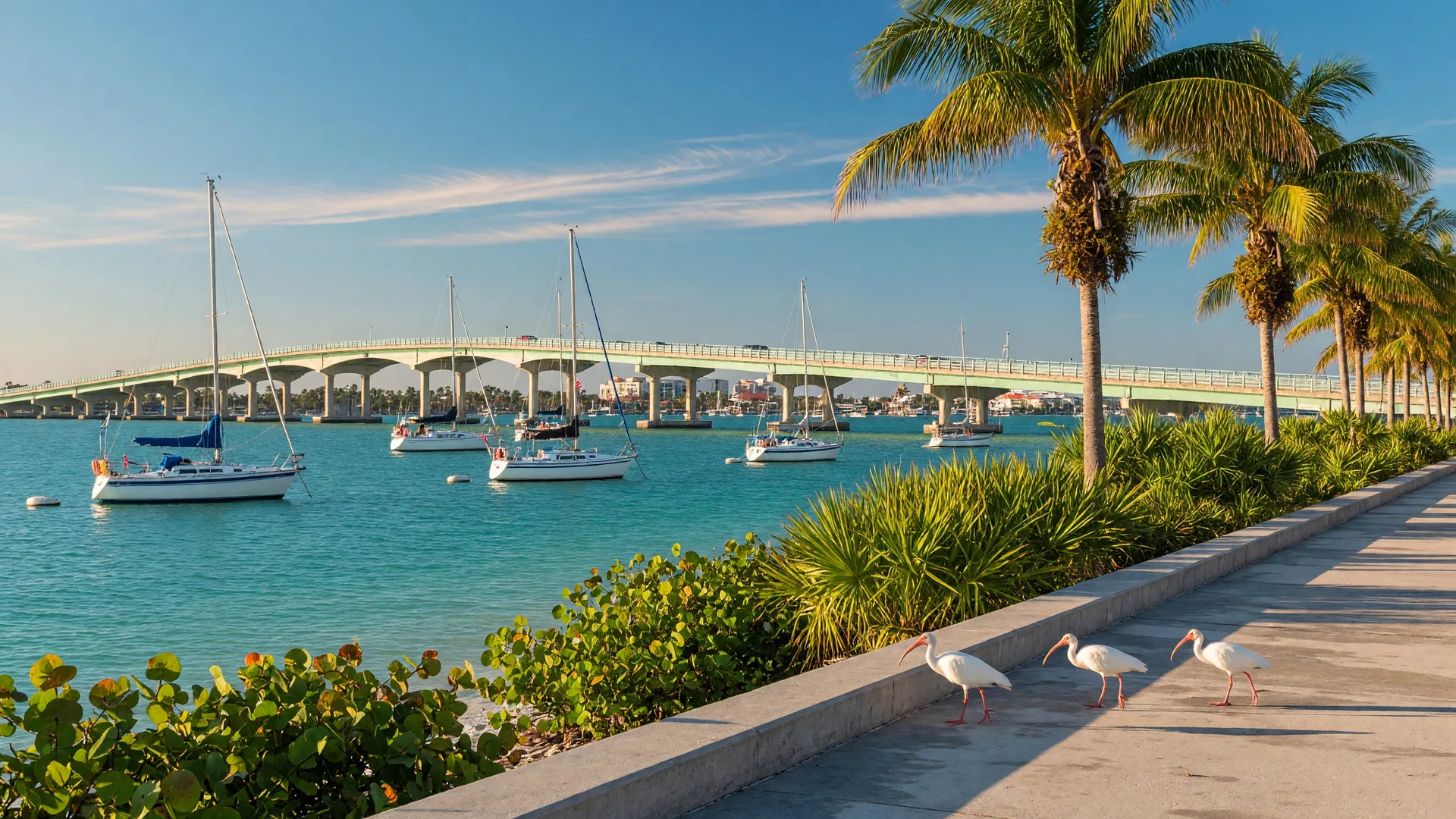
Let's start with what you'll notice right away. The winters are genuinely mild — daytime highs in the low to mid-70s from December through March, cool evenings, and almost no reason to own a heavy coat. You'll spend more time outdoors in January and February than you ever did in New York. The beaches — Siesta Key, Lido Key, Longboat Key, Anna Maria Island — are all within a 20- to 40-minute drive from downtown Sarasota, and they're among the best in the country.
Summers are hot and humid, with temperatures regularly in the low to mid-90s and afternoon thunderstorms from June through September. The humidity is real, and if you've only visited in winter, the first summer takes adjustment. Most New Yorkers adapt within a season, especially once they realize the trade-off is no snow, no ice, no commute through slush, and no heating bills in February.
The outdoor lifestyle is where Sarasota really separates itself. Kayaking in mangrove tunnels, paddleboarding on the bay, fishing off the pier, cycling on the Legacy Trail, golf at dozens of courses — these aren't occasional activities, they're part of daily life. And the cultural scene is stronger than most people expect: the Ringling Museum, Sarasota Opera, Asolo Theatre, Van Wezel Performing Arts Hall, and a calendar packed with festivals, farmers markets, and food events.
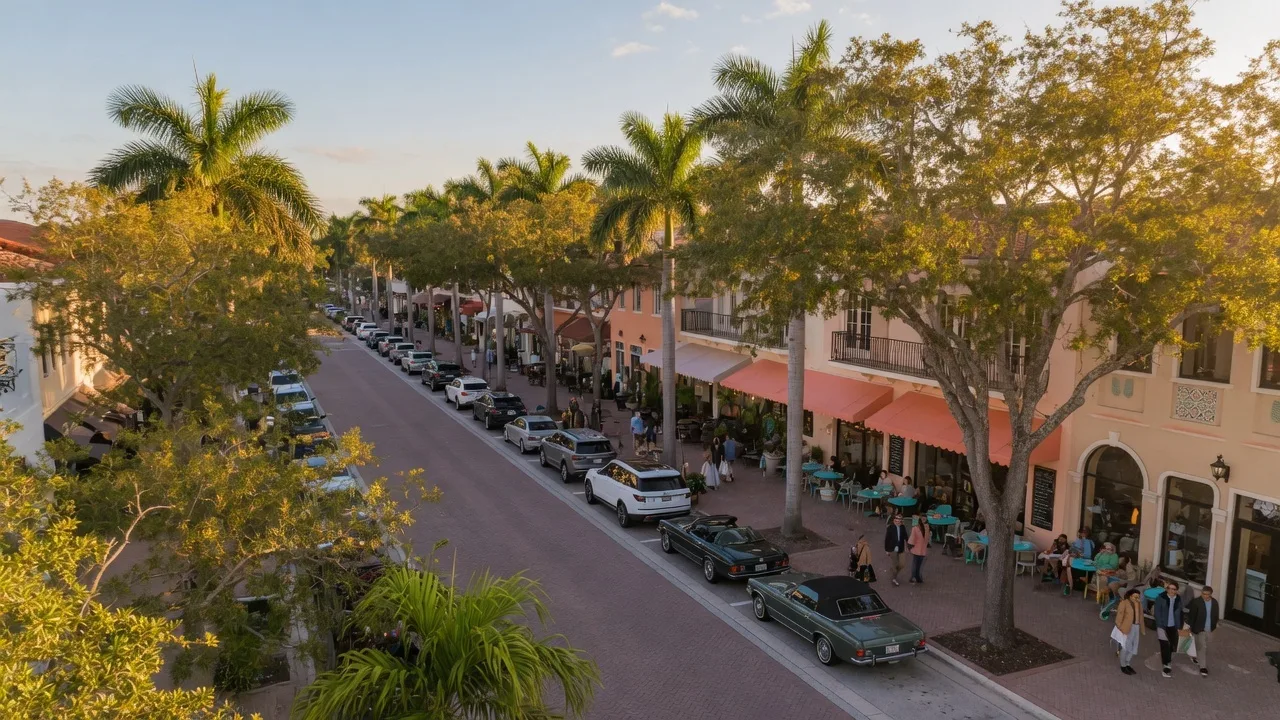
What New Yorkers typically miss isn't the city itself — it's the convenience. Walking to a coffee shop, hail-a-cab spontaneity, and the density of options that Manhattan provides. Sarasota's downtown has more walkability than most of the area, and neighborhoods like Palm Avenue and St. Armands Circle capture some of that street-level energy. But daily life here is more car-dependent, and the pace is quieter, especially in the evenings. For most New Yorkers who've made the move, that's not a loss — it's the point.
What does the Sarasota real estate market look like for New York buyers?
The Sarasota-area market in 2026 offers real choice at every price point. Here's what New York buyers can expect:
- $300,000 to $450,000: Well-maintained condos in established communities, townhomes in areas like Lakewood Ranch and Wellen Park, and single-family homes in North Port, Port Charlotte, and parts of Parrish. This range gives New Yorkers more space and better condition than a co-op in any outer borough.
- $450,000 to $750,000: Single-family homes with pools in Sarasota, Bradenton, and Venice. Updated construction in master-planned communities. waterfront properties on canals and intracoastal waterways. This is the sweet spot for many relocating families.
- $750,000 to $1.5 million: Luxury condos on the beach or bay, waterfront estates in Osprey and Longboat Key, custom homes in gated communities. New York buyers consistently remark how much further their budget goes at this level.
- $1.5 million and above: Premier waterfront estates, Gulf-front properties on the barrier islands, and high-end new construction. The luxury market here rivals what you'd find in the Hamptons, at a fraction of the price.
The market is more balanced than it was during the post-pandemic surge. Inventory has improved, price reductions are more common, and buyers have more negotiating leverage than they did two years ago. For current market conditions, see my latest Sarasota market update.
Property types range from beachfront condominiums and maintenance-free villas to estate properties on acreage. New construction communities — particularly Wellen Park, North River Ranch, and communities in Lakewood Ranch — offer modern floor plans with hurricane-rated construction, which appeals to buyers coming from regions where that's not a consideration.
Best neighborhoods for New Yorkers relocating to Sarasota
New Yorkers gravitate toward specific communities depending on their stage of life, budget, and lifestyle priorities. Here are the areas I see them gravitate toward most often:
Palm Avenue / Downtown Sarasota
This is the closest thing Sarasota has to a New York-feeling neighborhood. Palm Avenue is walkable, lined with galleries, boutiques, and restaurants. You can walk to the bayfront, the opera, and the farmers market. Condos and townhomes in this area range from $400,000 to well over $1 million. It appeals to New Yorkers who want culture, walkability, and urban energy without the density and cost of Manhattan.
Lakewood Ranch
The most popular master-planned community in the country for several years running, Lakewood Ranch draws families and active adults who want amenities — golf, tennis, pickleball, pools, trails, and social programming — all within a well-managed community. Price points range from the low $400,000s to over $1 million. For a detailed comparison, see my Lakewood Ranch vs. Sarasota guide.
Venice
Venice offers a smaller-town coastal atmosphere with a walkable historic downtown, excellent beaches, and some of the most affordable waterfront in the Sarasota region. Single-family homes range from $350,000 to $800,000, with waterfront properties going higher. It's particularly popular with retirees and empty nesters who want charm and aging-in-place appeal. Read more in my guide to living in Venice, Florida.
Osprey
South of Sarasota, Osprey is quieter and more rural-feeling, with larger lots, mature tree cover, and proximity to Oscar Scherer State Park. It's popular with buyers who want space, privacy, and a natural setting while still being 20 minutes from downtown Sarasota. Properties range from established single-family homes in the $500,000s to waterfront estates over $2 million.
Longboat Key
A barrier island between Sarasota and Bradenton, Longboat Key is known for its luxury condos, beachfront estates, and gated golf communities. It's quieter than Siesta Key and more exclusive-feeling. Condos start around $500,000, and waterfront properties can reach $3 million or more. For New Yorkers accustomed to the Hamptons or the Connecticut shore, Longboat Key offers a similar sense of retreat — with year-round warmth.
What you'll miss — and what you won't
I believe in being honest about trade-offs, so here's the real list:
What you'll miss
- New York pizza. You can find good pizza in Sarasota, but it won't be the slice you're thinking of. This is the one New Yorkers never stop talking about.
- The seasons. Fall foliage, the first snow, the feeling of a crisp October afternoon. Sarasota has seasons — they're just more subtle: dry season vs. wet season, and the slight cooling of November through February.
- Public transit. The MTA is gone. You'll drive everywhere, and errands that took a subway ride now take a car trip.
- The density of options. Thirty restaurants within walking distance, three theaters on the same block, a bodega on every corner. Sarasota's scene is good — it's just not the same concentration.
- Proximity to family and old friends. This is the real one. No matter how beautiful the beach is, you'll miss the people you left behind, at least in the beginning.
What you won't miss
- State and city income taxes. Your paycheck goes further the day you establish residency in Florida.
- Winter. January in Sarasota means lunch on a patio. January in New York means layering three coats and checking flight delays.
- NYC housing costs. A two-bedroom co-op in Brooklyn for $900,000 is a three-bedroom house with a pool in Sarasota.
- Commuting. The average New York commute is over 40 minutes each way, often on crowded public transit. In Sarasota, most drives are under 20 minutes, and they're on open roads.
- The congestion. Crowded sidewalks, noisy streets, the constant stimulation of a city that never slows down. Sarasota is active, but it breathes.
- Outdoor access. Within 20 minutes, you can be on a Gulf beach, casting a fishing line off a pier, or on a kayak in a mangrove estuary. That access is daily, not seasonal.
- Golf. Over 40 golf courses within a short drive. Year-round play. No cart restrictions from November to March.
How to make the move: practical tips for New Yorkers
Having guided many New Yorkers through this transition, here's the sequence that works best:
Timing your move
The best time to buy in Sarasota is during the quieter summer months (June through September), when there's less competition from seasonal buyers and more negotiating room. The best time to visit and explore the area is during season (January through March), when the social calendar is packed, the weather is ideal, and you can see the area at its most active. I recommend visiting twice — once in winter and once in summer — before you commit.
Finding the right home
Start by working with a local REALTOR who knows the communities inside and out — not a national referral network, but someone who can tell you the difference between two neighborhoods on the same street. I help clients narrow options based on their actual priorities: commute time to specific places, flood zone status, HOA rules, proximity to healthcare, and community character. The right home isn't just about square footage and price — it's about fit.
Setting up utilities and services
- Electricity: Florida has deregulated electric service in some areas. FPL (Florida Power & Light) is the primary provider in Sarasota County. Budget $200 to $400 monthly.
- Water and sewer: Typically provided by the county or municipality. Costs are moderate.
- Internet: Fiber optic service is widely available in Sarasota through providers like Frontier and Xfinity.
- Hurricane prep: Budget for storm shutters or impact windows if the home doesn't already have them. Have a plan before June 1 each year.
Getting your Florida driver's license
You have 30 days after establishing residency to obtain a Florida driver's license. The process is straightforward — visit a local DHSMV office with your current license, proof of residency (a utility bill or lease), your Social Security card, and the appropriate fees. You'll surrender your New York license and receive a temporary Florida license on the spot. Vehicle registration and title transfer follow a similar process. I recommend handling this early rather than letting it linger.
Establishing residency
Once you've established Florida as your primary residence, file for the Florida homestead exemption with the county property appraiser. This provides meaningful property tax relief and caps the annual increase in assessed value under the Save Our Homes provision. It's one of the most valuable steps a relocating homeowner can take, and it's one that people often forget in the rush of moving.
Frequently asked questions from New Yorkers moving to Sarasota
How much money will I save moving from New York to Sarasota?
Most New Yorkers who relocate to Sarasota see annual savings of $15,000 to $30,000 or more, depending on income level, filing status, and housing costs. The largest savings come from eliminating New York State and city income taxes. Property tax relief and lower everyday expenses contribute as well. Homeowners insurance in Florida is higher, which partially offsets other savings.
Can I buy a home in Sarasota while still living in New York?
Yes. Remote purchasing is well-established, and most closings can be handled through a title company with power of attorney or remote notarization. I guide out-of-state buyers through the entire process — video walkthroughs, remote document review, and coordinating inspections and appraisals so you're not flying back and forth constantly.
What's the best time of year to visit Sarasota before deciding to move?
Visit between January and March to see Sarasota during its peak season — the weather, the social scene, and the pace of daily life. Then visit again in July or August to experience the summer heat and humidity. Both experiences matter, and you should be comfortable with each before committing.
Do I need a car in Sarasota?
Yes. Sarasota does not have practical public transit, and the area is spread out. A car is a necessity for daily life. The upside: traffic is significantly lighter than New York, parking is available, and most destinations are within a 15- to 25-minute drive.
Is Sarasota safe from hurricanes?
No area of coastal Florida is immune to hurricanes. Sarasota is in a hurricane zone, and preparation is part of living here. Homes built or updated to current Florida building codes perform significantly better in storms. I help buyers understand flood zones, wind mitigation features, and insurance requirements before they purchase — not after.
Ready to explore what Sarasota has to offer?
Whether you're six months out or starting to think about it, I'd be glad to walk you through what I know — the neighborhoods, the costs, the timeline, and the details that matter for your specific situation.
Schedule a ConsultationI've spent more than 30 years in real estate, mortgage, and business ownership, including running my own brokerage. I bring that depth to every conversation, and I'm transparent about the trade-offs of each community and each decision. Moving from New York to Sarasota is a significant transition — and having someone who can guide you through each step, methodically and without pressure, makes all the difference. Let's chat about real estate.